BBFC Earns 1 Gold, 2 Bronze, and 2 Top-8 Medals at the Premier Challenge ROC/RJCC/RYC
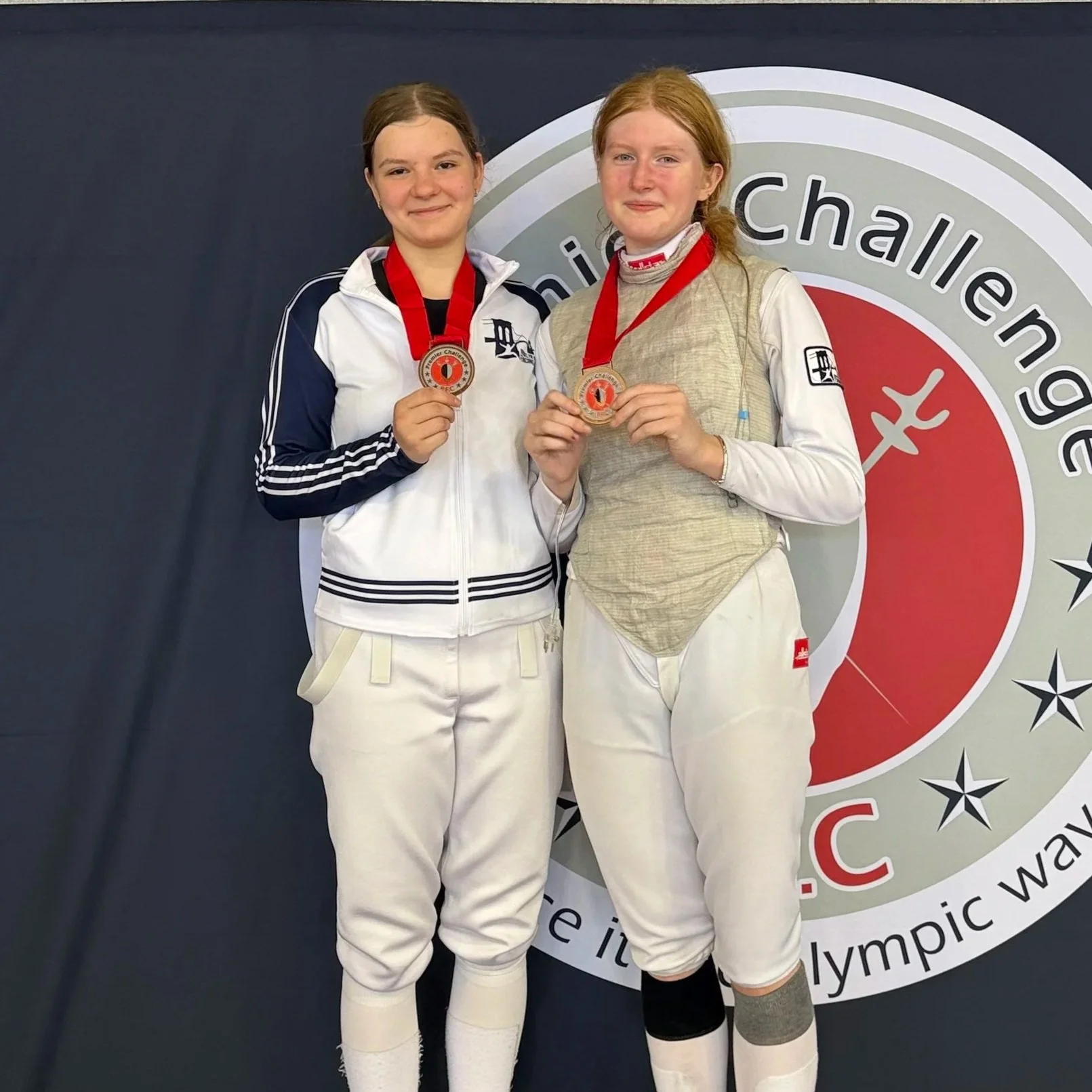
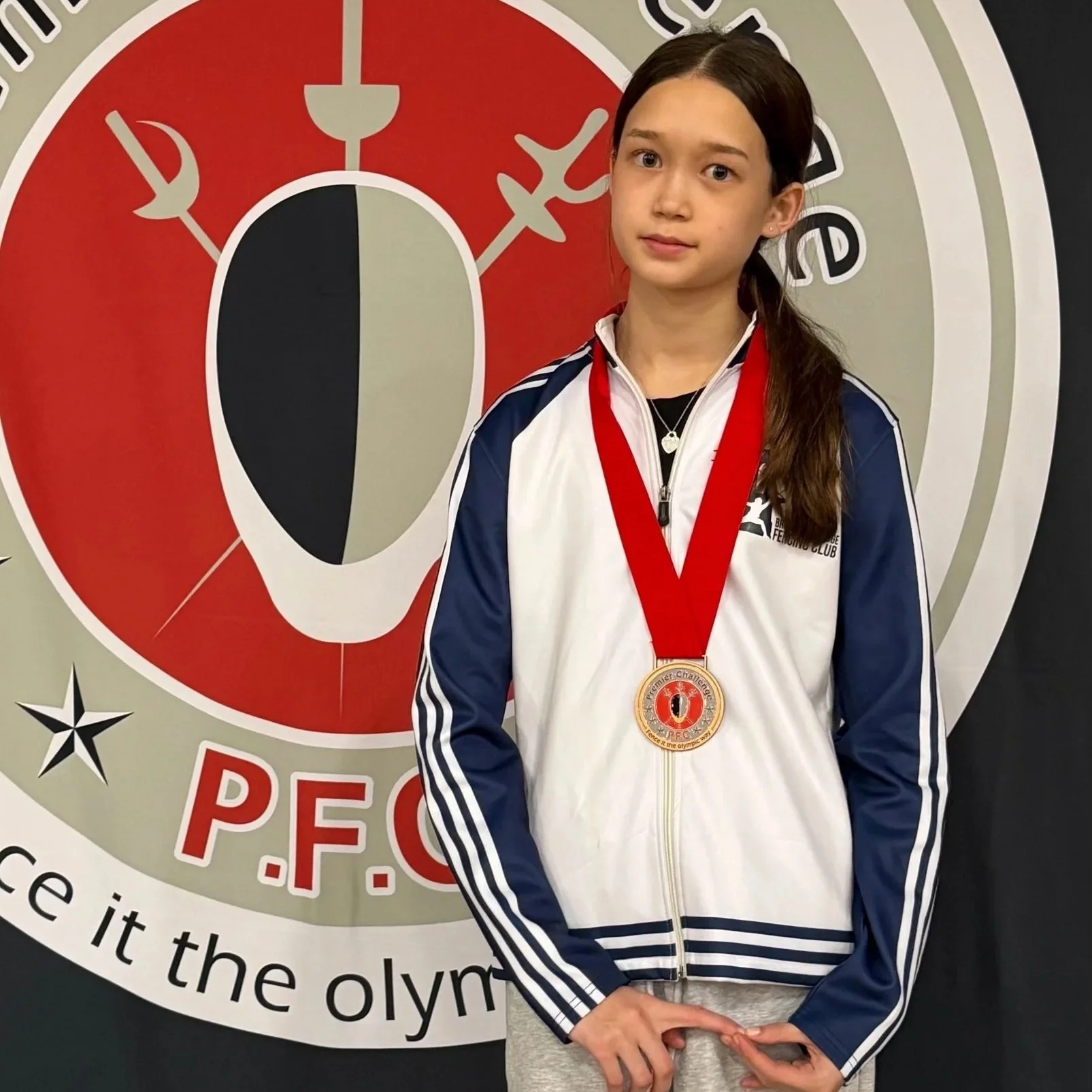
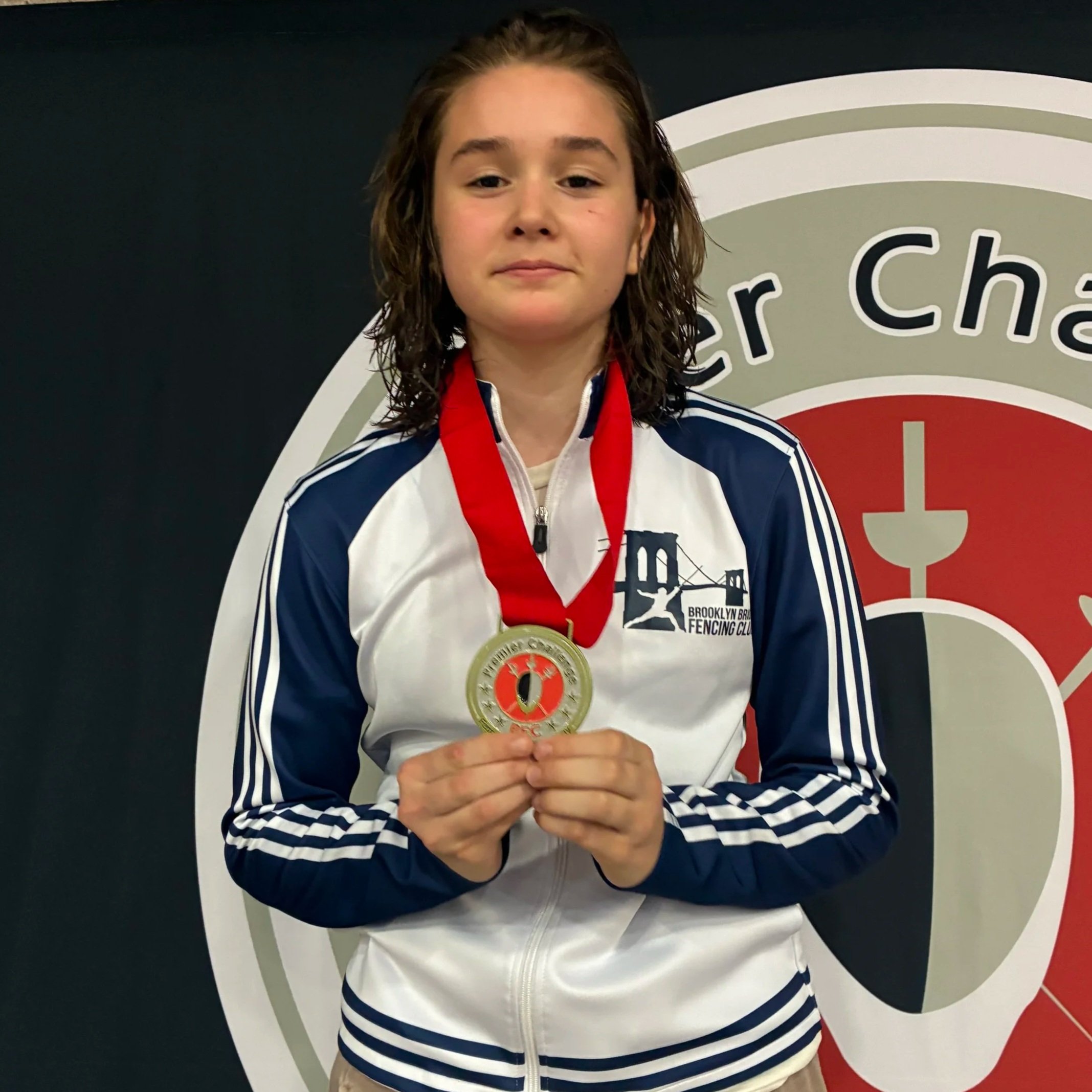
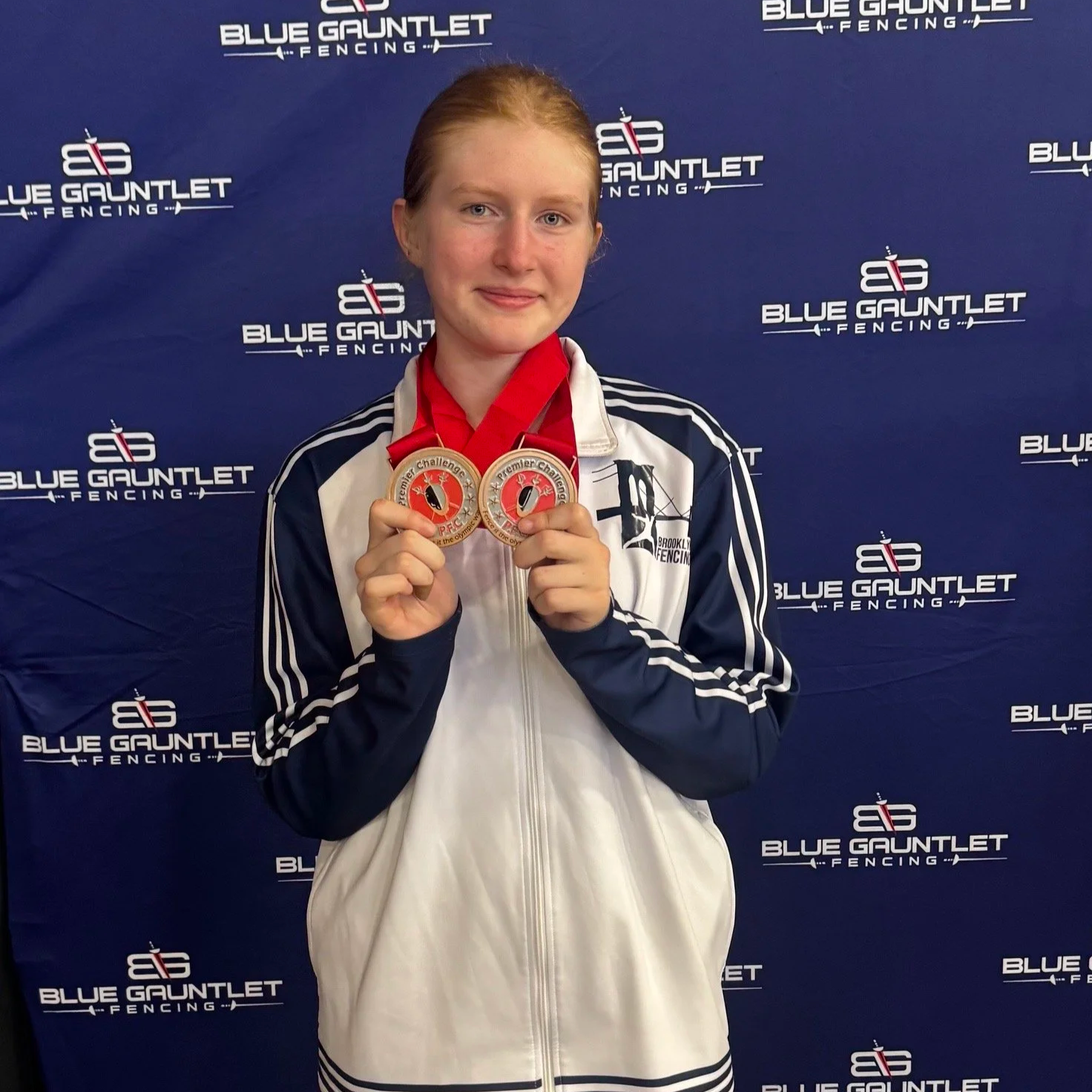
Brooklyn Bridge Fencing Club fencers delivered a series of strong performances at the Premier Challenge ROC/RJCC/RYC, competing in nine foil events from September 25-27.
The weekend’s top BBFC finish came from Genevieve “Neve” Murphy, who won Y-14 Women’s Foil. She also placed 19th in Cadet Women’s Foil and 40th in Division I-A Women’s Foil.
Annika Krahe earned a place on the Cadet Women’s Foil podium, tying for 3rd. She also finished 15th in Division I-A Women’s Foil.
BBFC athletes earned two top-eight finishes in Junior Women’s Foil, with Anastasia “Ana” Kapran finishing 6th and Isla Stewart finishing 8th. Isla also tied for 3rd in Division II Women’s Foil.
In Cadet Men’s Foil, Aeden Lee finished 24th and Ezra Bradford-Watt finished 25th. Ezra also placed 9th in Division II Men’s Foil. In Y-12 Men’s Foil, Quinn Moore finished 29th and Alexander Lin tied for 38th. In Y-10 Women’s Foil, Evelyn Gao tied for 11th and Eva Shang placed 18th.
Other BBFC results included Annabelle Hussian, 17th in Cadet and 41st in Division I-A; and Melody Fan, 11th in Division II, 59th in Cadet, and 30th in Y-14.
Congratulations to all our competitors, and thank you to the coaches and families who supported them throughout the competition.
BBFC Results
Junior Women’s Foil
Anastasia Kapran - 6th
Isla Stewart - 8th
Division II Women’s Foil
Isla Stewart - 3rd (tie)
Melody Fan - 11th
Cadet Men’s Foil
Aeden Lee - 24th
Ezra Bradford-Watt - 25th
Y-10 Women’s Foil
Evelyn Gao - 11th (tie)
Eva Shang - 18th
Cadet Women’s Foil
Annika Krahe - 3rd (tie)
Annabelle Hussian - 17th
Genevieve “Neve” Murphy - 19th
Isla Stewart - 29th
Anastasia Kapran - 39th
Melody Fan - 59th
Division I-A Women’s Foil
Anastasia Kapran - 12th
Annika Krahe - 15th
Genevieve “Neve” Murphy - 40th
Annabelle Hussian - 41st
Y-14 Women’s Foil
Genevieve “Neve” Murphy - 1st
Melody Fan - 30th
Y-12 Men’s Foil
Quinn Moore - 29th
Alexander Lin - 38th (tie)
Division II Men’s Foil
Ezra Bradford-Watt - 9th
BBFC Finds Early Season Tournament Success
BBFC Earns 3 Silver Medals and 5 Top-Eight Foil Finishes at the 2026 Mediterranean Games, Nittany Lion Cup, North Texas Roundup, and Trick or Retreat
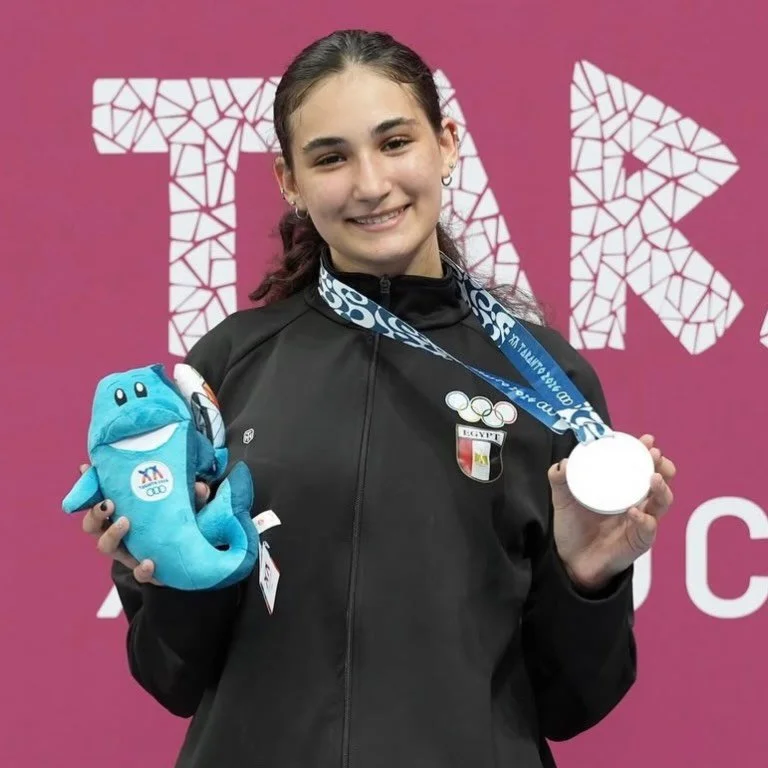
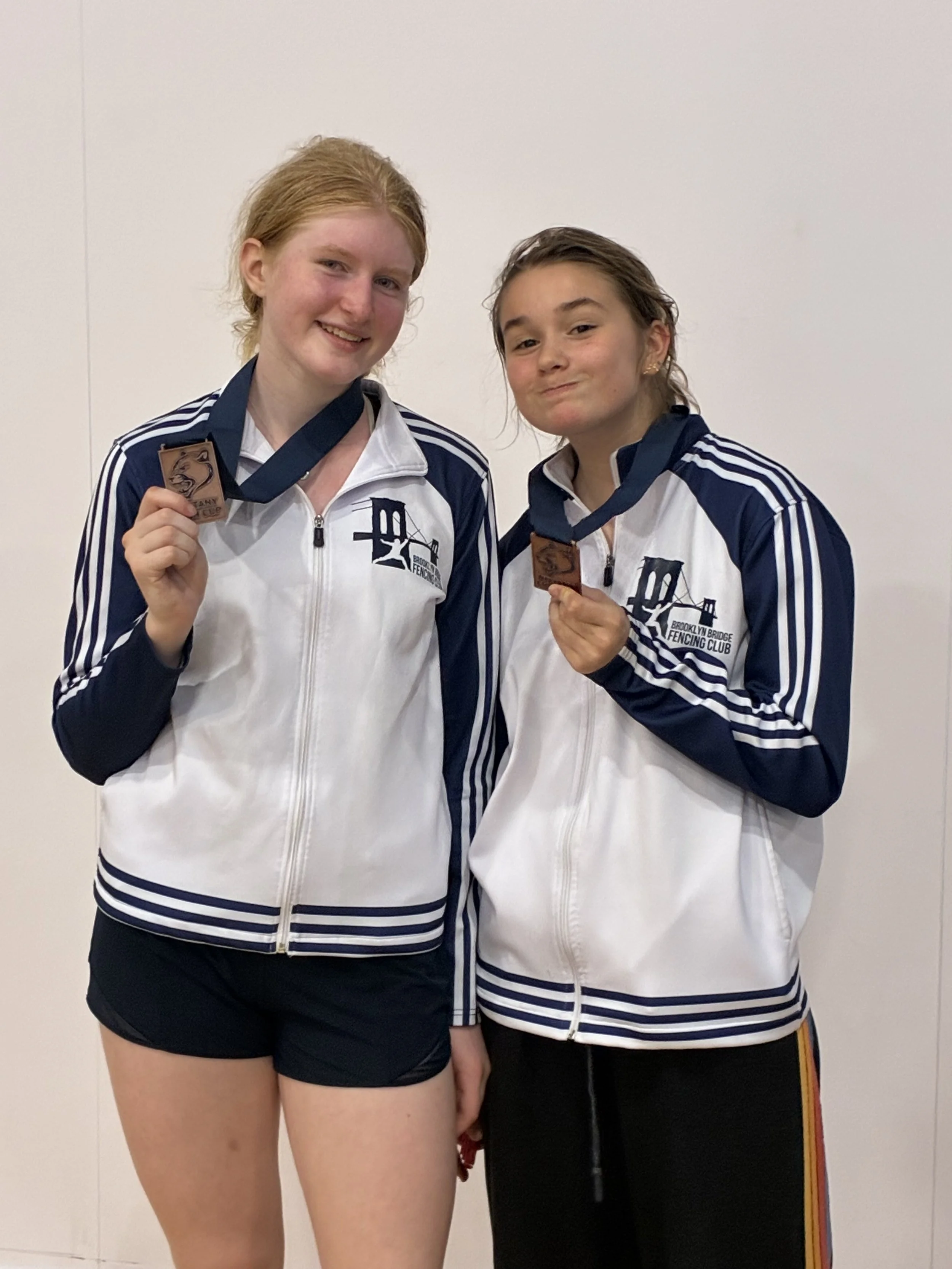
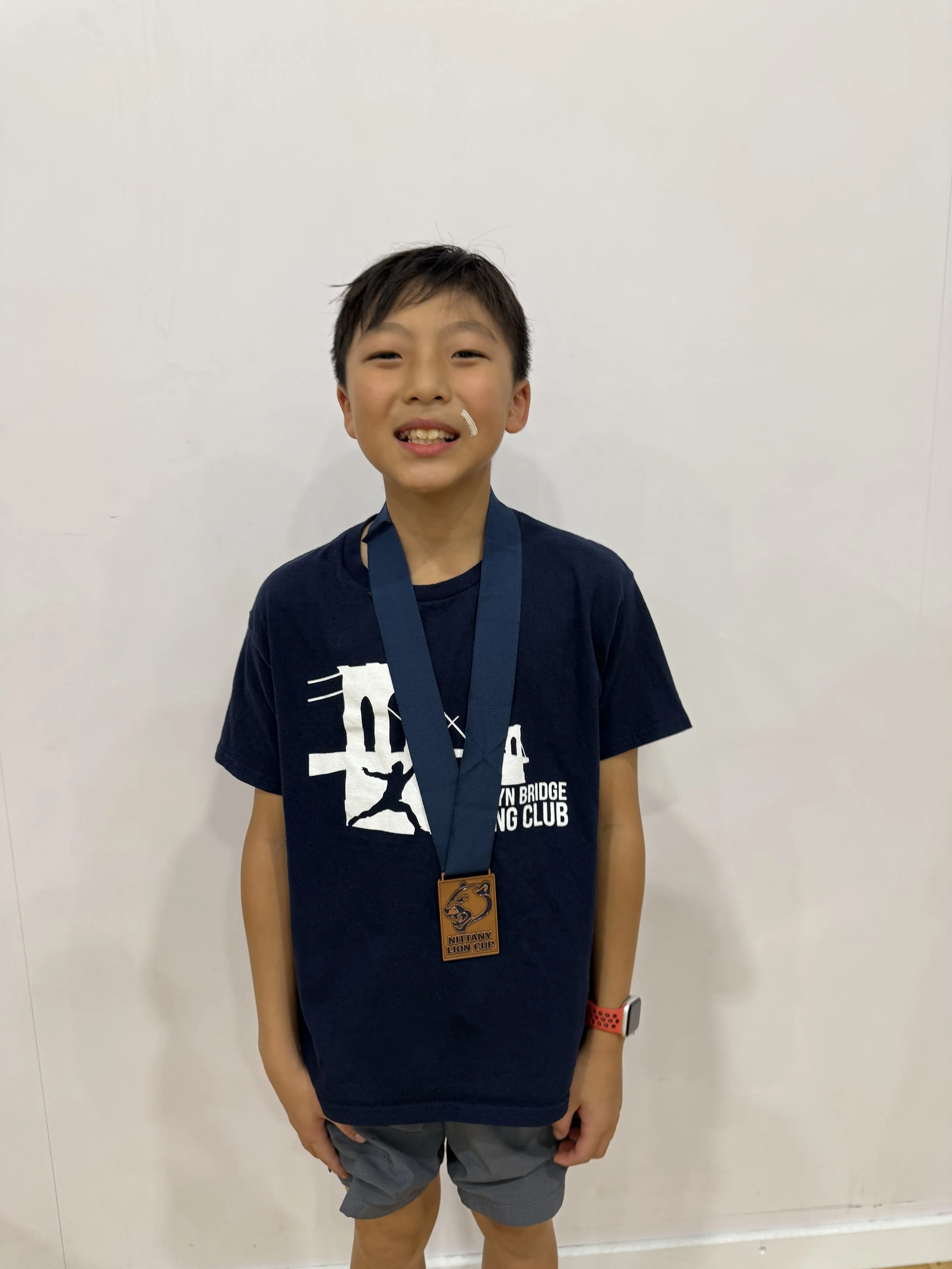
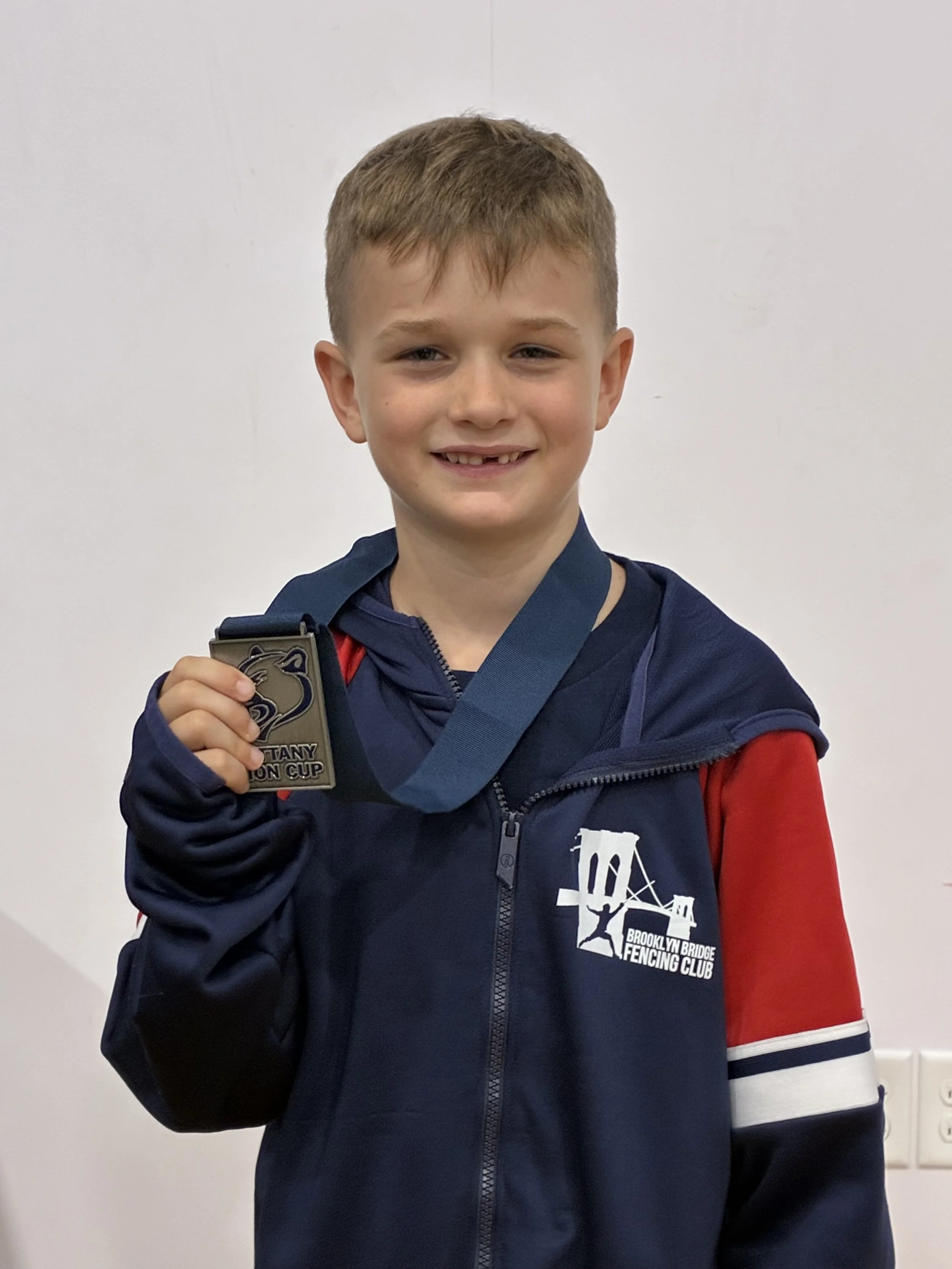
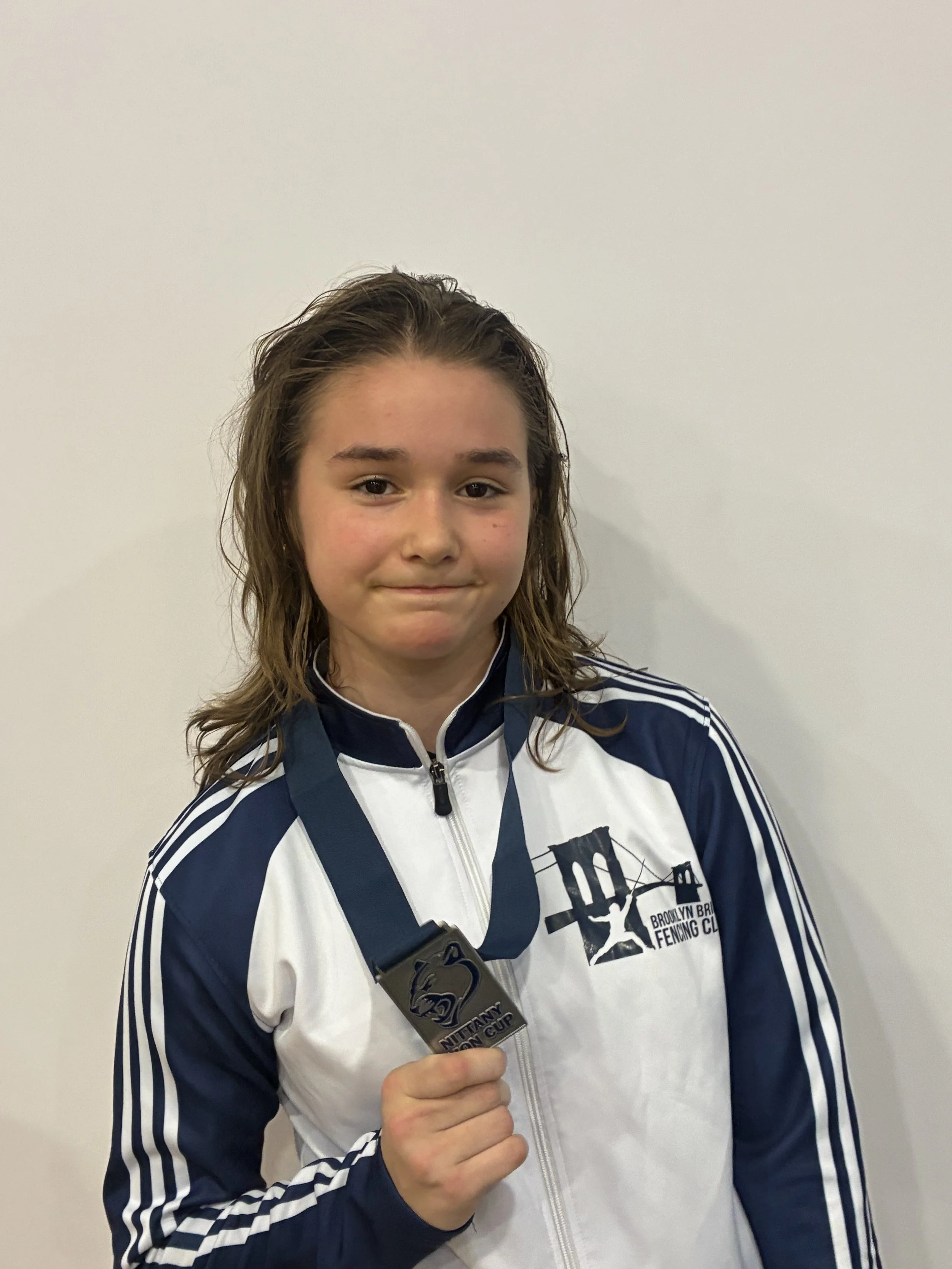
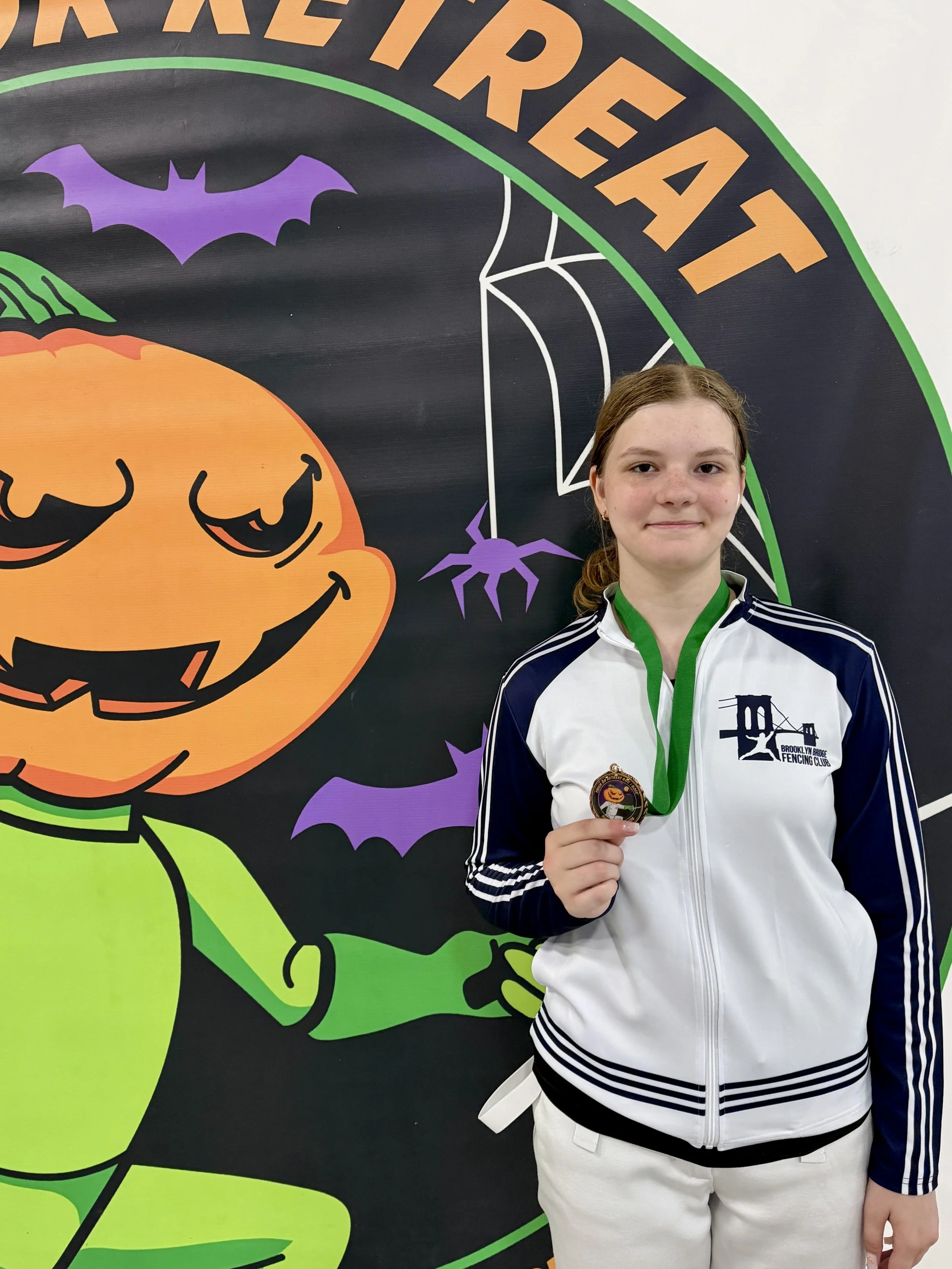
BBFC has found early season success with our fencers medaling and earning accolades even before the school year begins! Sara Amr Hossny turned in a history making performance at the 2026 Mediterranean Games in Taranto, Italy earning a Silver Medal and becoming the first Egyptian woman in history to win a medal in fencing at the Mediterranean Games.
Closer to home, Genevieve Murphy was awarded a Silver Regional Patch by USA Fencing for finishing the 2026 Season ranked #2 in Region 3 for Y12 Women’’s Foil.
Our fencers were also competing regionally in Texas, Pennsylvania, and New Jersey. And while last season we earned zero medals at the Nittany Lion Cuo and North Texas Roundup, this year, the club earned 6. These results reflect the hard work, consistency, and dedication that our fencers bring to the BBFC system of fencing. We are proud of all five athletes and look forward to seeing them continue building throughout the 2026-27 season.
2026 Mediterranean Games
Senior Women’s Foil
Sara Amr Hossny: 2nd place 🥈
Nittany Lion Cup RYC/RJCC
Cadet Women’s Foil
Genevieve Murphy: 2nd place 🥈
Y-8 Men’s Foil
Evan Murphy: 2nd place 🥈
Junior Women’s Foil
Genevieve Murphy: 5th place
Isla Stewart: 6th place
Y-12 Men’s Foil
Alexander Lin: 7th place
North Texas Roundup SYC/RJCC
Y-14 Women’s Foil
Genevieve Murphy: 8th place
Trick or Retreat ROC/RJCC
Cadet Women’s Foil
Anastasia Kapran opened the season with a strong Cadet performance.
Anastasia Kapran: 8th place
Ready to Start Fencing?
Your child can begin fencing in Brooklyn with clear, age-appropriate instruction and all necessary equipment provided.
Book an Introductory Private Lesson: A 20-minute one-on-one session for ages 4 and older. The lesson costs $49.49, and we provide all equipment.
Try the Continue Fencing Package: Two private lessons and two group classes in foil or saber for $219.99.
Explore competitive pathways: Ask us about training and competition opportunities at the regional and national levels.
BBFC Earns 2 Medals at the 2026 USA Fencing Summer National Championships

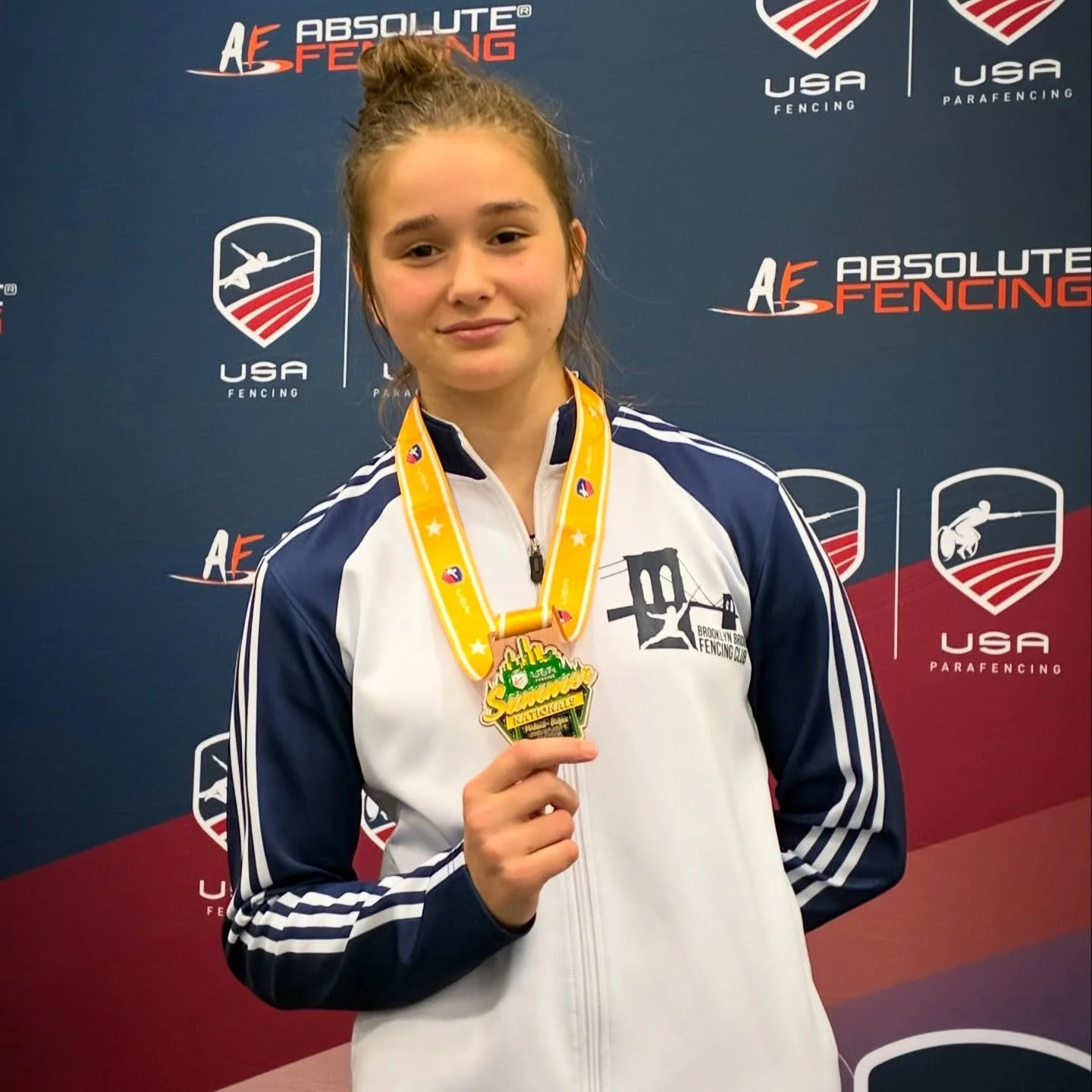
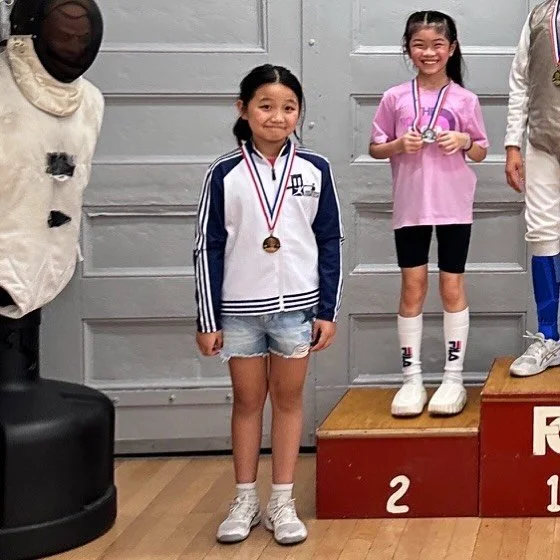
Brooklyn Bridge Fencing Club sent 18 fencers to the 2026 USA Fencing Summer National Championships and came home with two medal finishes. BBFC’s standout results included a Veteran-40 Men’s Foil bronze medal from Coach Michael Green and a 6th-place finish from Neve Murphy in Y12 Women’s Foil.
BBFC Highlights at Summer Nationals
Coach Michael Green opened the competition with a hard-earned 3rd place 🥉 finish in Veteran-40 Men’s Foil.
Neve Murphy placed 23rd out of more than 250 fencers in Junior Women’s Foil, an outstanding result for a 12-year-old competing in the U20 division.
Neve Murphy closed her competition with a 6th-place finish in Y12 Women’s Foil, placing 6th out of 225 fencers.
Alex Lin upset the #12 seed in Y10 Men’s Foil and placed 31st out of 146 fencers.
A Gritty Top-8 Comeback
Neve’s Y12 Women’s Foil medal run included one of the most exciting moments of the tournament. In her final bout to make the Top 8, she trailed 10-6 in the third period before finishing on a 9-4 run and winning 15-14 in overtime.
That kind of comeback takes composure, belief, and competitive toughness - especially on the national stage.
More BBFC Success Close to Home
Closer to home, Eva Shang earned 5th place in Y10 Women’s Foil at the Fencer’s Club Youth Foil Event.
Congratulations to Coach Michael, Neve, Eva, and all 18 BBFC fencers who represented the club at Summer Nationals. These results reflect the hard work, consistency, and commitment our fencers bring to training and competition.
Ready to Start Fencing?
If your child is inspired by these results, Brooklyn Bridge Fencing Club is a great place to begin.
Book an Introductory Private Lesson: Ages 5+, 20 minutes, $49, all equipment provided.
BBFC fencers shine at home, nationally, and internationally

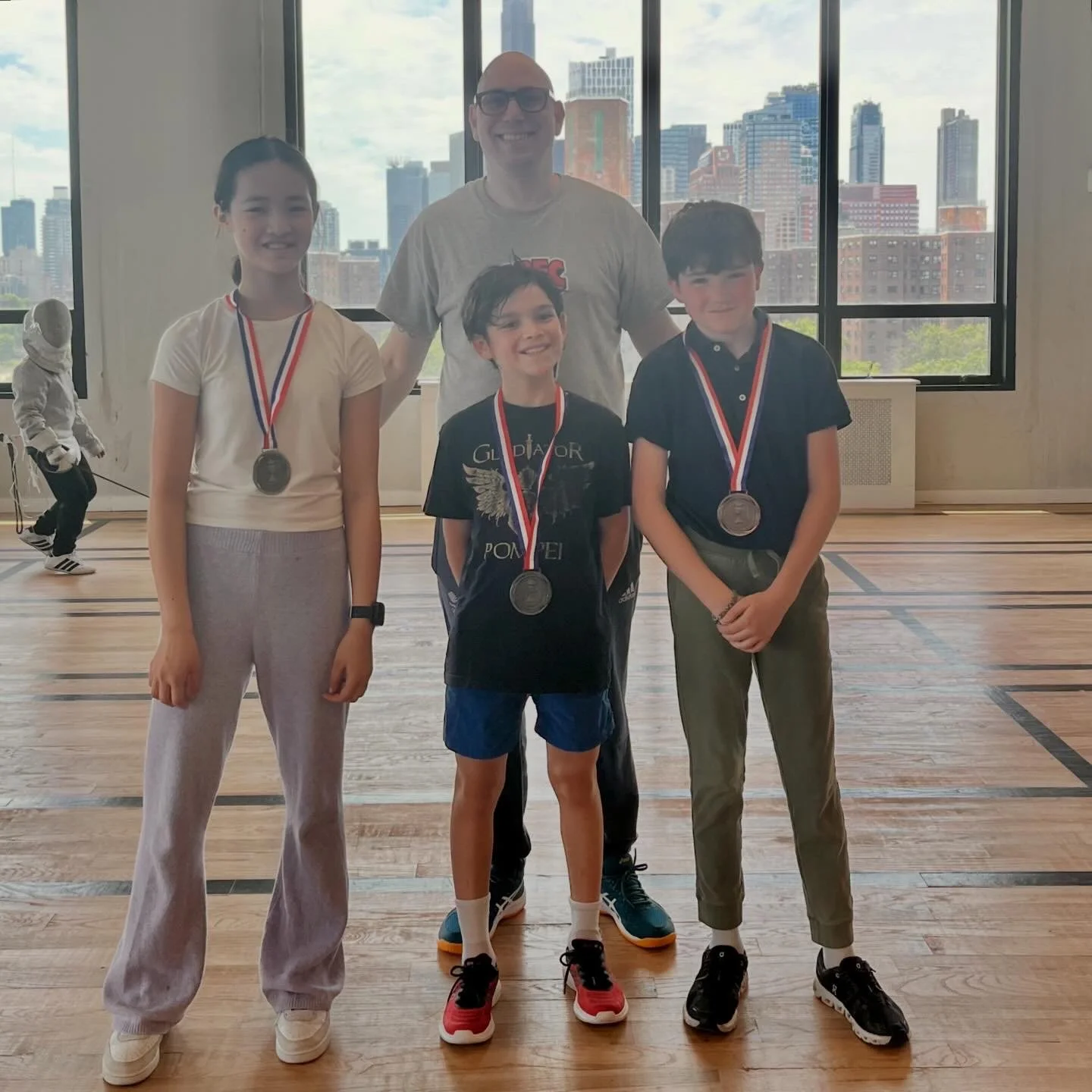
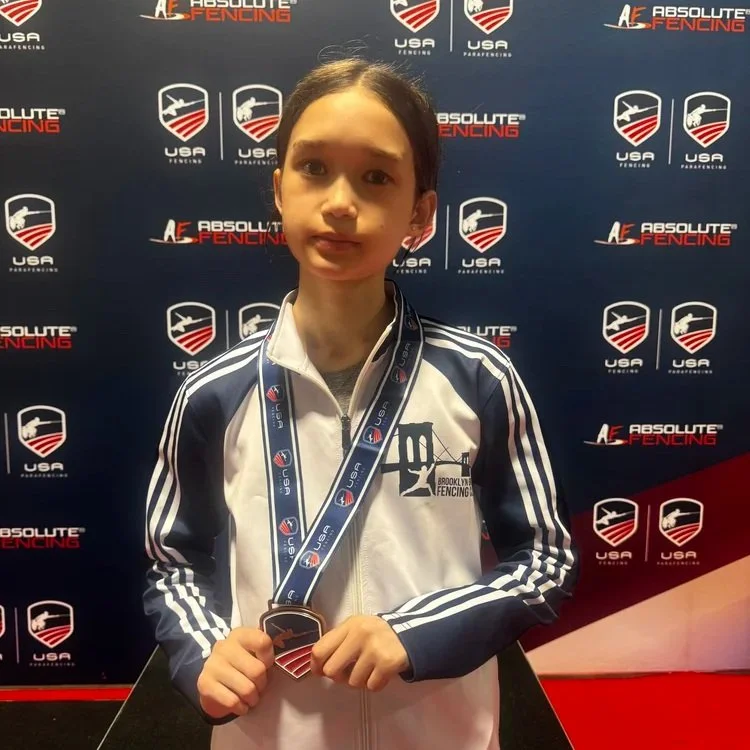
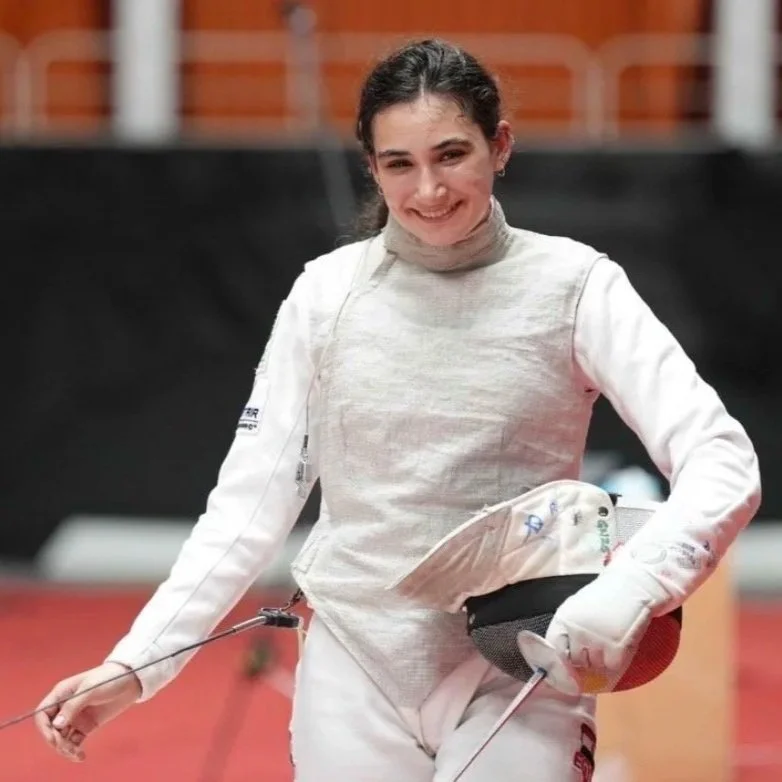
Brooklyn Bridge Fencing Club had a busy and exciting tournament weekend, with BBFC fencers competing at the club, on the national stage, and internationally.
From Beginner Class students getting their first real tournament experience to national-level Junior and Cadet competition in Las Vegas to a senior international championship in Africa, this weekend showed the full range of the BBFC pathway.
In-House Beginner Class Tournament at BBFC
On Saturday, we hosted our third In-House Beginner Class Tournament of the year at the club.
This event gives Beginner Class students a supportive first tournament experience, gives our coaches a chance to assess each fencer’s progress, and gives parents the opportunity to see their children fence in a real competitive setting.
Y8 Mixed Foil
Eva: 1st place 🥇
Ethan: 2nd place 🥈
Sadie: 3rd place 🥉
Nael: 3rd place 🥉
Y10 Mixed Foil
Presleigh: 1st place 🥇
Alexander: 2nd place 🥈
Sam: 3rd place 🥉
We are proud of all of our Beginner Class fencers for stepping onto the strip, competing, and giving their coaches and families a clear look at their progress.
June SJCC in Las Vegas, Nevada
BBFC was also represented at the June SJCC in Las Vegas.
The Super Junior & Cadet Circuit is a national-level tournament focused on Junior, U20, and Cadet, U17, athletes. SJCCs bring together deep competitive fields and give fencers valuable experience across full days of Junior and Cadet fencing.
Five BBFC fencers posted strong results in a large national field. Three earned national points, and Annika Krahe earned a new A26 rating with her 7th-place finish.
Annika Krahe: 7th place, earned A26 rating and national points
Genevieve Murphy: 37th place, earned national points
Annabelle Hussian: 51st place, earned national points
Senior African Championships
Internationally, BBFC’s Sara Amr Hossny represented Egypt at the 24th Senior African Championships, winning double gold in both the Individual and Team Events.
This zonal fencing championship is a continental tournament that awards FIE Senior points and affects final ranking before World Championships
Senior Women’s Foil
Sara Amr Hossny: 1st place 🥇, representing Egypt
Senior Team Women’s Foil
Egypt: 1st place 🥇
Team members: Fatema Wahba, Noha Hany, Sara Amr Hossny, Lojain Khaled
This weekend’s results reflect the strength and range of the BBFC pathway: students gaining experience in their first in-house tournaments, BBFC fencers testing themselves in deep national Junior and Cadet competition, and one of our own competing and winning at the senior international level.
Congratulations to all BBFC fencers, families, and coaches on an excellent weekend!
Ready to Start Fencing?
If your child is ready to try fencing, Brooklyn Bridge Fencing Club is a great place to begin. We train youth and teenage fencers in foil and saber at our Dumbo/Vinegar Hill facility, and we offer clear next steps for families interested in fencing lessons Brooklyn, youth fencing NYC, and competitive fencing club pathways.
Book an Introductory Private Lesson - ages 4+, $49, 20 minutes, one-on-one, all equipment provided.
Try the Introductory Fencing Package - 2 private lessons plus 2 group classes for $199, available in foil and saber.
Ask about competitive pathways - for fencers ready to train and compete at the regional and national level.
New Limited-Edition BBFC T-Shirts Celebrate New York
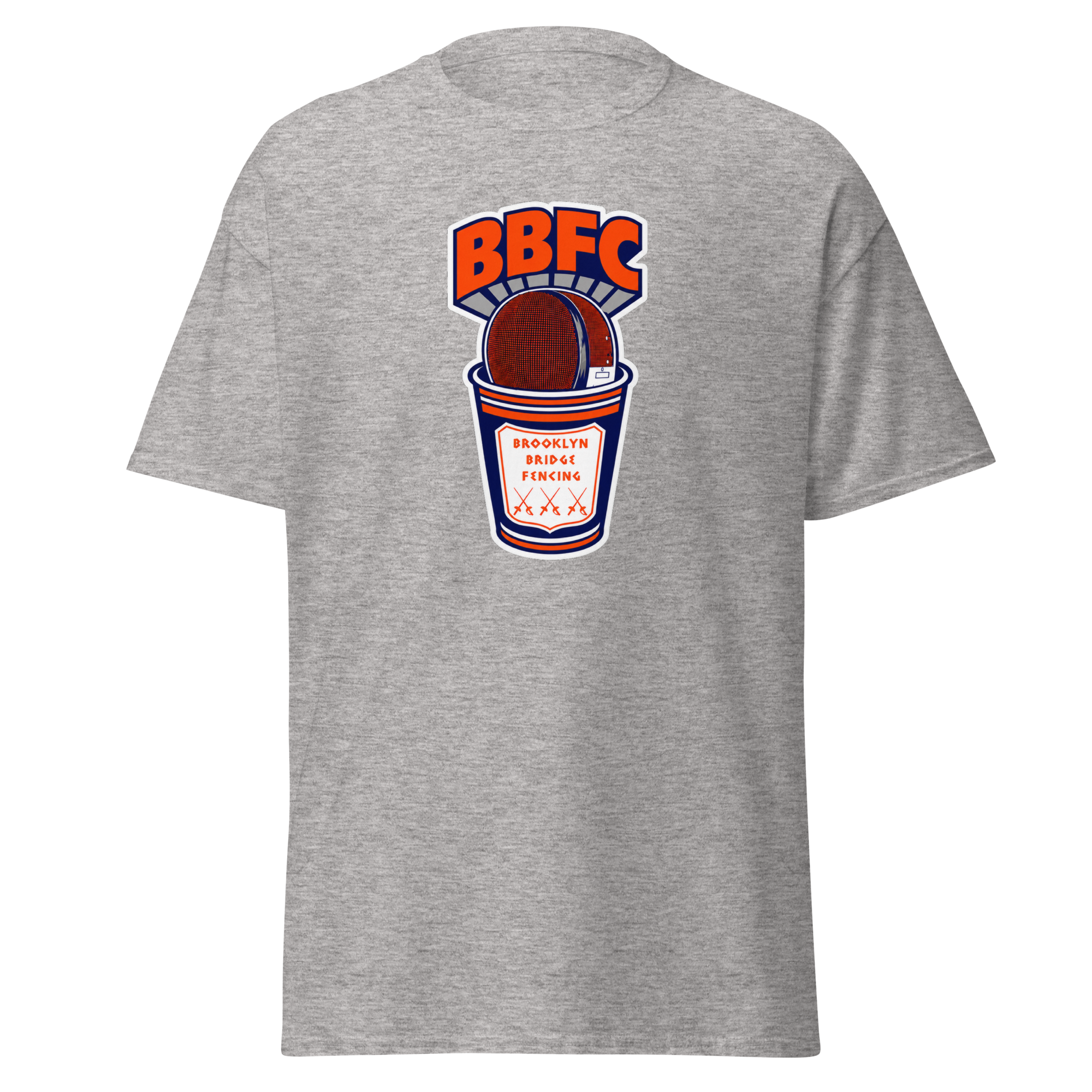
Stand out
Just in time for the NBA Finals and the 2026 USA Fencing Summer Nationals, Brooklyn Bridge Fencing Club has released a new set of limited-edition t-shirt designs built around two things New Yorkers know well: playoff energy and the city’s unmistakable coffee cup culture.

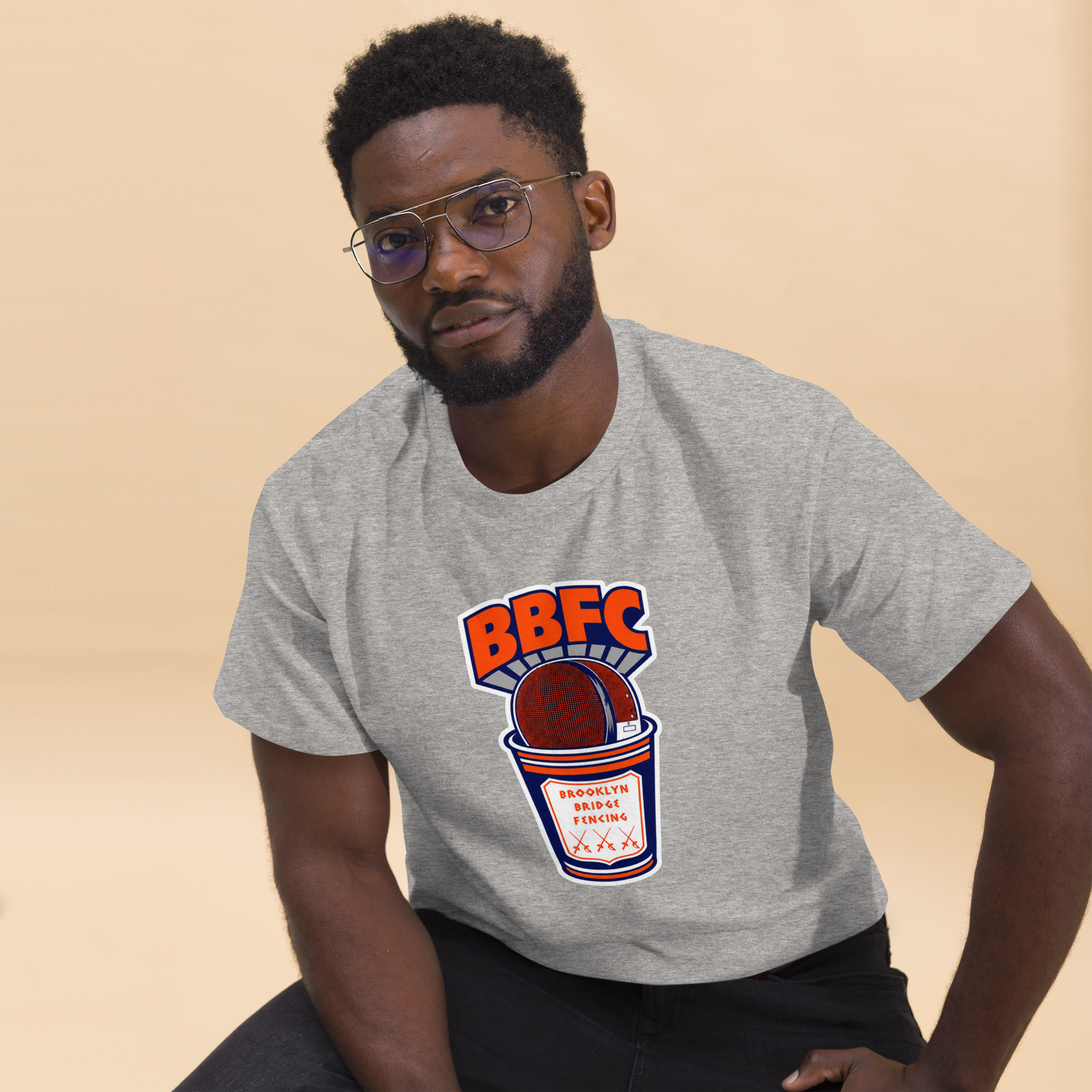

This 2026 limited-edition shirt collection pays homage to a true New York icon and the New York Knicks’ historic playoff run, while keeping the focus exactly where it belongs for BBFC families: representing Brooklyn on the road, at the club, and at one of the biggest fencing tournaments of the year.
If you’re traveling to Summer Nationals, watching the Finals, cheering on your fencer from the side of the strip, or just want something that feels very BBFC and very New York, this is the drop.
From the Fencing Strip to The Devil Wears Prada 2: Anne Cebula Shows Where Fencing Can Take You
Brooklyn’s own Anne Cebula has already lived a story that sounds like it belongs on the big screen: Olympic épée fencer, NCAA champion, Columbia graduate, professional fashion model, and now a credited appearance in The Devil Wears Prada 2.
In the film, Cebula is credited as a Marc Jacobs model — a fitting role for someone whose life has moved so naturally between two worlds that demand confidence, precision, and poise: fencing and fashion.
What makes Anne’s story especially inspiring is that she did not begin fencing as a tiny child with years of private lessons behind her. She first became fascinated by the sport after seeing fencing at the Beijing 2008 Olympic Games. Years later, she finally got the chance to try it through a public high school program. From that first real opportunity, she built a path that led to Columbia University, an NCAA championship, Team USA, the Paris Olympics, and now a place in one of fashion’s most iconic movie worlds.
That path says something powerful about fencing.
Fencing is often described as physical chess, but for kids it can become much more than that. It teaches athletes how to stand tall under pressure, make quick decisions, recover from mistakes, and keep going after a tough touch. Every bout asks a fencer to be brave, creative, focused, and resilient. Those qualities do not stay on the strip. They carry into school, friendships, auditions, interviews, college, careers — and, in Anne Cebula’s case, even the runway and the movies.
It is easy to look at an Olympian and think, “That’s someone else’s world.” But Anne’s story is a reminder that every fencer starts with a first lesson. Before the Olympics, before the fashion shows, before The Devil Wears Prada 2, there was a moment when she simply tried the sport.
At Brooklyn Bridge Fencing Club, we love helping children find that first moment.
Our introductory private fencing lesson is designed for brand-new fencers. No experience is needed. No equipment is needed. Students learn the basics one-on-one with a BBFC coach, including how to stand en garde, move with balance, use the blade, and understand the rules and etiquette of the sport. Most importantly, they get to feel what makes fencing so exciting: the mix of athleticism, strategy, imagination, and confidence.
Your child may not know yet whether fencing will become a fun weekly activity, a competitive passion, a college opportunity, or something that shapes who they become. That is the best part. The first lesson is simply the beginning.
Anne Cebula’s journey from Brooklyn to the Olympic Games to the fashion world is extraordinary — but it began with trying something new.
Ready to see what fencing can unlock for your child?.
How to Start Youth Fencing Classes in Brooklyn: A Parent's Complete Guide
Fencing is one of the few sports where a beginner and a college recruit can train at the same club. Starting late doesn't mean falling behind. It's also more accessible than most parents expect, with Brooklyn clubs providing all equipment and offering lessons for children as young as 4.
This guide covers the exact steps to get your child started: booking a first lesson, choosing between weapons, and evaluating club fit.
How to start youth fencing classes in Brooklyn
Here's the short answer: book an introductory private lesson at a local club. Most Brooklyn fencing academies start beginners with one-on-one instruction where kids learn basic footwork, blade work, and etiquette.
Equipment is provided, so you don't need to buy anything beforehand. From there, beginners typically move into group classes once they've got the fundamentals down.
Step 1: Book an introductory private fencing lesson
Private lessons come first for a reason. In a 20-minute one-on-one session, your child gets undivided attention from a coach who can explain the basics without the distractions of a group setting.
They'll learn the foundational stance called "en garde" (knees bent, weapon extended, ready position). They'll also learn how to move forward (advance), move backward (retreat), and attack (lunge).
At Brooklyn Bridge Fencing Club, intro lessons run $49 for ages 5 and up. All equipment is included. The club separates bookings by age group—5–10 and 11+—so coaches can match their teaching style to the student.
Step 2: Try the introductory fencing package
After that first lesson, you might be wondering whether the club is actually a good fit. That's where intro packages come in. Rather than committing to a monthly membership right away, packages let you test both private and group formats together.
BBFC's Introductory Fencing Package costs $199 and includes two private lessons plus two group classes. You can purchase one package for foil and a separate one for saber. This gives your child a chance to try both weapons before picking one.
Step 3: Enroll in beginner group fencing classes
Once your child has the basics, group classes become the main training format. This is where fencers practice with peers, learn to "bout" (fence against an opponent), and build consistency through repetition. The social element matters too—kids often stay motivated when they're training alongside others their age.
Monthly memberships at BBFC run $499 for unlimited classes or $249 for once-a-week attendance. After the first month, an annual club membership is required.
What age can children start fencing classes in Brooklyn
The youngest age for private lessons and group classes is typically 4 years old. Fencing works well for young children because it develops coordination, focus, and discipline without requiring the size or strength advantages that matter in contact sports.
Brooklyn clubs structure their programs by age, so a 5-year-old won't be training alongside teenagers. Parents wondering how to start youth fencing classes in Brooklyn can find age-appropriate options at most local academies.
At BBFC, ages 4–6 have a dedicated Saturday morning session from 9:00–9:45 am. Kids ages 6 and up attend weekday classes from 4:00–5:30 pm or Saturday mornings from 10:00–11:30 am.
How much do youth fencing classes cost in Brooklyn
Pricing varies by lesson type and commitment level. Here's a general breakdown of what Brooklyn programs charge:
| Lesson Type | Typical Price Range | What's Included |
|---|---|---|
| Intro Private Lesson | $49–$75 | 20-min one-on-one, equipment provided |
| Intro Package | $150–$250 | Multiple privates + group classes |
| Monthly Group Classes | $249–$499/month | Unlimited or once-weekly options |
| Summer Camp (weekly) | Varies by program | Full-day instruction, equipment, supervision |
Private fencing lesson pricing
Private lessons offer real-time correction that's hard to replicate in a group. At BBFC, the $49 intro lesson covers 20 minutes of one-on-one coaching with all equipment provided. Coaches tailor the session to your child's age and coordination level.
Introductory fencing package pricing
Packages bundle different lesson types at a better rate than buying them separately. BBFC's $199 package works out to roughly $50 per session across two privates and two group classes. Since you can buy one package per weapon, families often purchase both foil and saber packages to compare.
Group class membership pricing
Monthly memberships are where ongoing training happens. The unlimited option makes sense if your child wants to attend multiple times per week. The once-weekly plan works better for families balancing fencing with other activities or sports.
Summer fencing camp pricing
Camp costs vary widely depending on whether the program runs half-day or full-day. BBFC offers NYC's only full-day fencing camps (9am–5pm), with optional early drop-off and late pickup for an additional fee.
What to expect at your child's first fencing lesson in NYC
Walking into a fencing club for the first time can feel unfamiliar. You'll see long, narrow strips on the floor where fencers practice, and electronic scoring machines light up when touches land. It looks different from a typical gym, but the environment is welcoming once you know what's happening.
Fencing equipment provided for beginners
You don't need to buy anything before your child's first lesson. Clubs provide all protective gear:
Mask: Protective headgear with a mesh face guard that covers the entire face
Glove: Worn on the weapon hand for grip and protection
Weapon: A foil or saber, depending on the program
Skills and fundamentals covered
Early lessons focus on building a foundation. Your child will learn:
En garde: The basic ready stance with knees bent and weapon extended
Footwork: Advance (step forward), retreat (step back), and lunge (explosive forward attack)
Blade work: Simple attacks and parries (defensive blocks that redirect an opponent's blade)
Rules and etiquette: Saluting opponents before and after bouts, understanding right-of-way (the rule system that determines who scores when both fencers hit)
Lesson format and duration
Private intro lessons run about 20 minutes. That's long enough to cover fundamentals without overwhelming a young beginner. Beginner group classes last 1.5 hours and include warm-ups, instruction, drills, and supervised practice with other students.
Beginner fencing classes for kids in Brooklyn NYC
After introductory lessons, group classes become the core of your child's training. This is where fencers build skills through repetition and learn to adapt to different opponents.
Foil fencing classes for youth
Foil is the most common starting weapon. It's a lighter blade that targets only the torso, and scoring depends on "right-of-way"—a rule system that rewards the fencer who initiates an attack correctly.
If both fencers hit at the same time, only the one with right-of-way scores. The emphasis on technique and timing makes foil a solid foundation for the sport.
Saber fencing classes for youth
Saber differs from foil in both target area and style. Fencers can score with cuts (slashing motions) as well as thrusts, and the valid target includes everything above the waist.
The pace tends to be faster and more explosive. Some clubs, including BBFC, offer both weapons so families with different aged children can fence without having to compete against each other.
Weekly class schedule options
Brooklyn fencing clubs typically run classes multiple days per week. BBFC offers beginner classes six days a week, with age-specific time slots that keep younger children (ages 4–6) separate from older beginners (ages 6+).
Brooklyn youth fencing summer camps
Summer camps pack intensive training into a condensed timeframe. They're useful for building skills quickly or maintaining momentum during school breaks when regular classes might not fit the schedule.
Full-day fencing camp structure
A full-day camp includes more than just fencing drills. At BBFC, the 9am–5pm schedule covers:
Group instruction: Age- and skill-appropriate coaching sessions
Games and conditioning: Physical development activities beyond fencing technique
Bouting: Supervised practice matches against other campers
Social time: Lunch breaks and community-building activities
Ages and skill levels accepted
Most Brooklyn fencing camps accept children ages 6–16, from complete beginners to competitive fencers. No prior experience is required, and all equipment is provided. Your child just needs athletic clothing and sneakers.
Brooklyn Bridge Fencing Club Earns 4 Top-4 and 11 Medals Overall at Fencers Club Youth Foil on 5/17/26
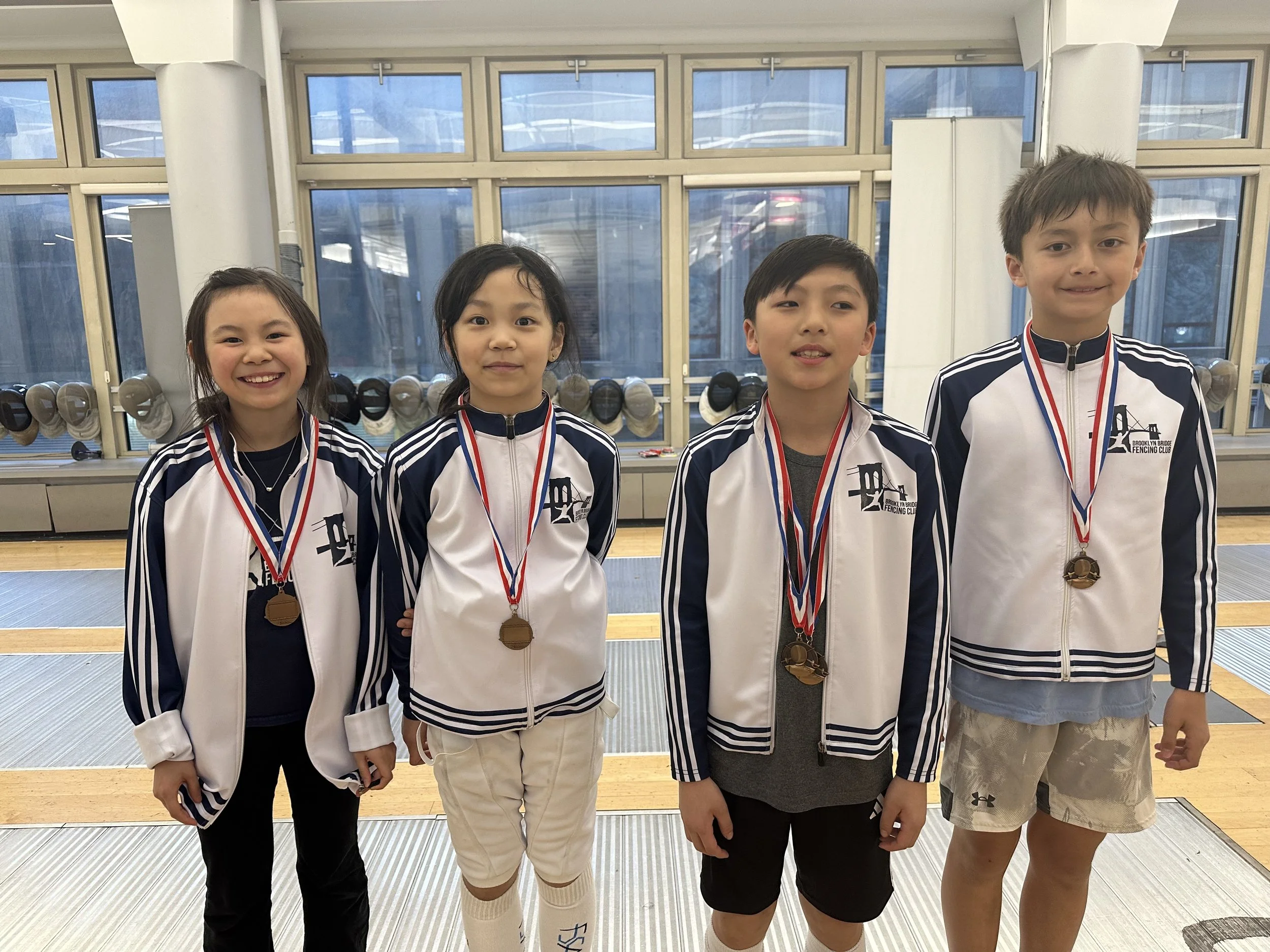
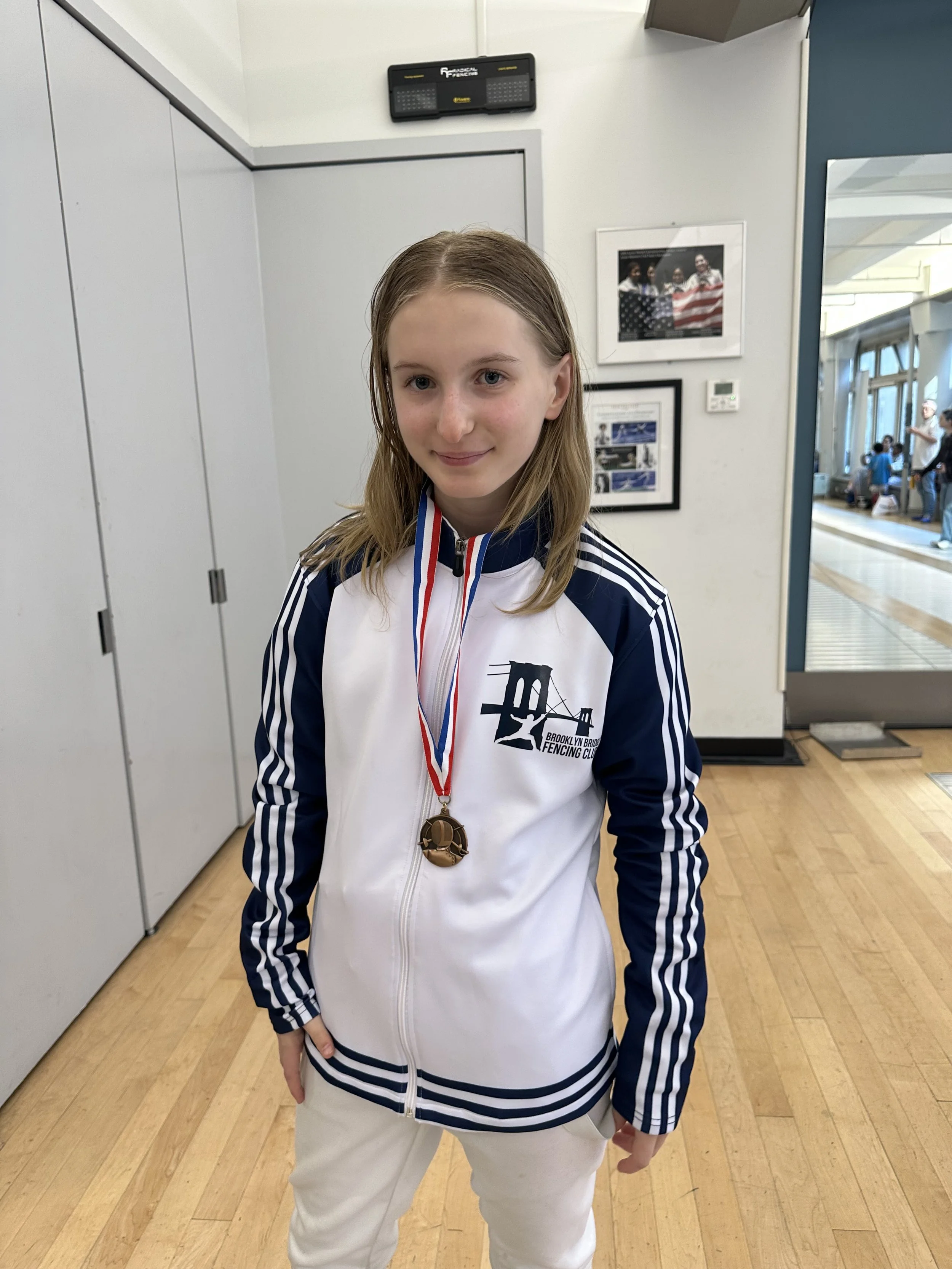
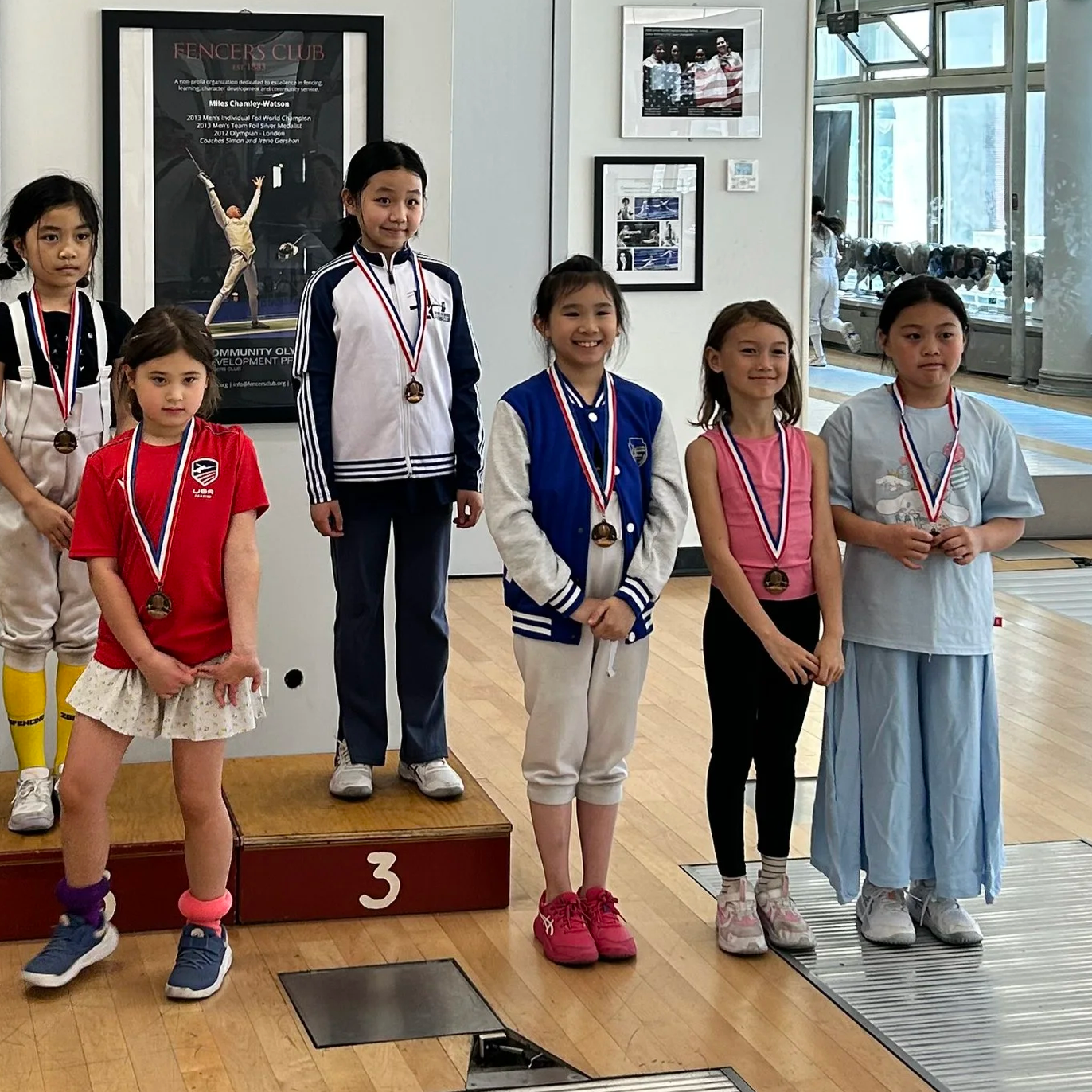
Brooklyn Bridge Fencing Club had 16 fencers compete in seven foil events winning 4 Top-4 medals and 11 medals overall. BBFC was represented across Y-8, Y-10, Y-12, and Y-14 competition with strong results throughout the event. This was a terrific showing for our team and a fun one to celebrate as a club. From our youngest competitors stepping onto the strip to returning fencers earning medals, BBFC athletes delivered a day full of poise, effort, and well-earned success.
Y-8 Men's Foil
Dean Chiang: 6th place
Y-8 Women's Foil
Eva Shang: 3rd place
Jordan Kreiling: 7th place
Y-14 Men's Foil
Dylan Cheng: 3rd place
Quinn Moore: 8th place
Y-12 Men's Foil
Alexander Lin: 8th place
Y-12 Women's Foil
Ana Levite: 7th place
Y-10 Men's Foil
Juno Mazur: 3rd place
Alexander Lin: 6th place
Y-10 Women's Foil
Evelyn Gao: 3rd place
Emery Huang: 6th place
Results Summary
BBFC showed impressive depth across the full youth age range at Fencers Club Youth Foil. Those outcomes reflect the steady work, consistency, and discipline our athletes are building through the BBFC system, and they show up clearly across multiple age groups on competition day.
How to choose a youth fencing club in Brooklyn
Not all fencing clubs offer the same experience. A few factors can help you figure out which program fits your family's goals.
Coach credentials and Olympic-level experience
The quality of coaching matters for long-term development. Look for coaches with competitive experience, formal coaching certifications, and a track record of developing youth fencers.
BBFC's founder, Dan Kellner, is a 2004 Olympian, U.S. Fencing Hall of Fame member, and has coached athletes to Olympic and World Championship medals.
Facility quality and fencing equipment
A well-equipped facility makes training safer and more effective. Look for adequate fencing strips, proper flooring, and well-maintained equipment. BBFC's Dumbo location features nearly 8,000 square feet with 20 full-length strips on custom hardwood flooring.
Competitive pathway from beginner to college recruitment
If your child develops serious interest, you'll want a club that offers a clear progression from beginner classes to competitive training. BBFC's pathway moves fencers from beginner classes to the Future Champions program to the Competitive Training Program. Guidance on college recruitment is available for those who reach that level.
Start your child's fencing journey at Brooklyn Bridge Fencing Club
Brooklyn Bridge Fencing Club combines Olympic-level coaching with a welcoming environment for beginners. Located in Dumbo/Vinegar Hill, BBFC offers a clear path from first lesson to competitive success—whether your child wants to fence recreationally or pursue college recruitment.
Do Beginner Fencing Camps Provide Equipment for Kids?
If you're signing your child up for fencing camp and wondering whether you need to buy a mask, jacket, and sword before day one—you don't. Most beginner fencing camps provide all the equipment kids use, from protective gear to practice weapons, at no extra cost.
This guide covers exactly what's included in loaner gear and what you still need to pack from home. It also covers when it makes sense to invest in your child's own fencing kit.
What Equipment Do Beginner Fencing Camps Provide for Kids?
Yes, most beginner fencing camps provide all the gear your child will use—mask, jacket, glove, and weapon—at no extra cost. Camps typically supply sanitized loaner equipment that staff size and fit to each child on arrival. For younger kids, usually ages 6–8, many programs use lighter plastic weapons that are easier to handle and less intimidating for first-timers.
This matters because a full beginner fencing kit runs anywhere from $150–$300 if you buy it yourself. Camps providing equipment removes that upfront cost entirely, which makes sense when your child is just trying the sport for the first time.
You won't know if they'll love fencing or lose interest after a week. There's no reason to invest in gear before they've had a chance to experience it.
One thing to keep in mind: while fencing equipment is covered, you're still responsible for bringing personal items like athletic clothes, sneakers, and lunch. More on that below.
What Fencing Gear Do Camps Provide for Kids?
Fencing gear looks different from anything your child has probably worn for other sports. The full set is often called a "fencing kit," and each piece has a specific job. Here's what camps typically provide:
Fencing mask
The mask is a mesh face covering that protects the entire head, face, and throat. It looks a bit like a beekeeper's helmet, with a sturdy bib that wraps around the neck. Camps provide masks that meet USFA (United States Fencing Association) safety standards, so you don't have to worry about whether the protection is adequate.
Fencing jacket and underarm protector
The jacket is a thick, padded top that covers the torso and arms. It absorbs the impact when your child gets hit, which happens constantly in fencing—that's the whole point of the sport.
Underneath the jacket, on the weapon arm side, fencers wear something called a plastron. This is an extra protective layer that covers the armpit and part of the chest.
The plastron exists because the jacket's seams create small gaps where a blade could slip through. The armpit is a particularly vulnerable spot during a lunge.
Fencing glove
The glove protects the weapon hand and wrist. It's thicker and more padded than a regular athletic glove, with a long cuff that extends partway up the forearm.
Camps stock both left-handed and right-handed gloves. During check-in, staff will ask which hand your child uses and fit them accordingly.
Fencing weapon for foil or saber
Beginners use practice weapons sized for their age and height. The two most common weapons at youth camps are foil and saber, and they work differently:
Foil: A thrusting weapon where fencers score by hitting the opponent's torso with the tip of the blade
Saber: A cutting and thrusting weapon where fencers can score with the edge of the blade or the tip, targeting anything above the waist
Your child's camp track determines which weapon they'll learn. Some camps offer both, which lets families see which one clicks.
Body cord and lamé for electric scoring
Once kids move past the very basics, they start using electric scoring equipment. This is how competitive fencing works—a machine registers touches instead of a referee watching by eye.
The body cord is a wire that runs from the weapon, up the sleeve, and out the back of the jacket. It plugs into a reel connected to the scoring machine.
The lamé (pronounced "la-MAY") is a metallic vest worn over the jacket. When the weapon tip hits the lamé, it completes an electrical circuit and the machine lights up.
Beginners don't always use electric equipment on day one. Camps provide it once kids are ready to bout (fence against each other in practice matches).
What to Bring to Fencing Camp Besides the Gear
Fencing equipment is covered, but you're responsible for everything else your child wears and carries. Here's what to pack:
Athletic clothing and long socks
Your child will wear their own athletic clothes underneath the fencing equipment. Bring an extra t-shirt and a pair of leggings or sweatpants. Children cannot fence in shorts.
Indoor sneakers with non-marking soles
Fencing footwork requires flat, supportive shoes with good lateral stability. Court shoes—like tennis or volleyball shoes—work well because they're designed for quick side-to-side movement.
Running shoes aren't ideal. The thick, cushioned soles reduce the ground feel fencers rely on for quick direction changes. The elevated heel can throw off balance during lunges.
Water bottle and packed lunch
Full-day camps run 6–8 hours, and fencing is physically demanding. Your child will need:
A refillable water bottle (at least 16 oz)
Lunch with protein for sustained energy
1–2 snacks for breaks between sessions
Any medications or allergy items
Knee-length athletic pants or sweatpants
These go under the fencing knickers for comfort and protection. Shorts don't work—they leave skin exposed between the knickers and socks. This causes discomfort during the hundreds of lunges your child will do throughout the day.
Sweatpants or athletic leggings are both fine. The key is full leg coverage.
Is Loaner Fencing Equipment Safe and Clean for Kids?
This is one of the most common questions parents ask, and it's a fair concern. Shared equipment sounds less than ideal, especially masks and gloves that absorb sweat.
Do fencing camps provide equipment for kids? Yes—reputable camps clean and sanitize loaner gear between uses. Masks and jackets are deodorized after each session, and high-touch items like gloves get extra attention.
Staff also inspect equipment regularly for wear—checking mask mesh for dents, jacket padding for thin spots, and weapon blades for cracks.
Here's what to look for when evaluating a camp's equipment standards:
Sanitization process: Ask how often gear is cleaned and what products are used
Safety inspections: Find out if staff check equipment before each session or just periodically
Sizing practices: Good camps fit each child individually rather than handing out random sizes
At Brooklyn Bridge Fencing Club, we maintain loaner equipment to the same standards we'd use for our own competitive fencers. Every piece gets inspected, cleaned, and stored properly between uses.
How Foil and Saber Camp Equipment Differs
If your child's camp offers both foil and saber, the weapon choice affects some of the gear they'll wear. The differences come down to where fencers can score valid touches.
In foil, only touches to the torso count, so the lamé covers just that area. In saber, the entire upper body is valid target, including the arms and head. That is why saber fencers wear a conductive mask overlay and a lamé that extends down the arms.
Camps providing both weapons will fit your child with the right lamé and mask for whichever discipline they're learning. At BBFC, our summer camps offer both foil and saber tracks, so families can try each weapon and see which one fits their fencer's style.
When to Buy Your Child Their Own Fencing Equipment
Since camps provide equipment for kids, there's no rush to buy anything before your child has committed to the sport. That said, there are natural points where owning personal equipment starts to make sense.
1. After they commit to weekly group classes
Once your child enrolls in ongoing classes, owning a glove and weapon improves comfort and hygiene. The glove is usually the first purchase—it's relatively affordable ($20–$40) and eliminates the shared-glove factor that some kids find unpleasant.
A personal weapon comes next. Having the same foil or saber every session helps your child develop consistent blade feel, which matters as their technique improves.
2. Before their first local tournament
Tournaments typically require personal equipment that meets USFA safety standards. A good starting purchase includes a mask, glove, and weapon. Your child's coach can recommend specific brands and verify that gear meets competition requirements before you buy.
3. Once they enter competitive training
At the competitive level, full personal kit is expected. This includes everything from mask to body cord, plus backup weapons in case something breaks mid-tournament.
Coaches can advise on quality brands, proper fit, and where to find good value. Buying fencing equipment is an investment, and guidance from someone who knows the sport helps families avoid expensive mistakes.
Start Your Child's Fencing Journey at Brooklyn Bridge Fencing Club
At BBFC, we provide all equipment for summer camps, beginner classes, and introductory private lessons. Our full-day Brooklyn Fencing Camp runs 9am–5pm for ages 6–16, with both foil and saber tracks available.
Intro private lessons are available for children ages 4 and up at $49 for a 20-minute session.
Founded by Olympian and U.S. Fencing Hall of Fame member Dan Kellner, BBFC is one of only five clubs nationwide to produce Olympic and World Championship medalists in foil. Our nearly 8,000 square-foot facility in Dumbo features 20 full-length fencing strips—one of the largest training spaces in New York City.
Whether your child is trying fencing for the first time or seeking a competitive home, we provide equipment, coaching, and community support.
Physical and Mental Benefits of Youth Fencing
Most youth sports build physical fitness or mental sharpness. Fencing develops both simultaneously. The constant back-and-forth of reading an opponent, making split-second decisions, and executing precise movements creates a training environment.
It's as demanding cognitively as it is athletically.
This guide covers the physical and mental benefits of youth foil fencing. It explains why foil is the ideal starting weapon and how these skills translate to confidence, resilience, and academic performance.
Physical and mental benefits of youth foil fencing
If you've been researching activities for your child, you've probably noticed fencing described as a "full-body workout." That's accurate, but it undersells what's actually happening. Youth foil fencing builds cardiovascular endurance, agility, coordination, and core strength simultaneously—and it does so through constant movement and reaction rather than repetitive drills.
Unlike soccer or basketball where a child might wait for the ball to come their way, fencing keeps kids engaged every second. The opponent is right there, three feet away, and something is always happening.
Improved coordination and balance
The en garde stance—fencing's ready position—looks simple but requires both sides of the body to work together in an unfamiliar way. Your child's front arm extends the weapon forward while the back arm counterbalances behind. The feet stay in a specific alignment, roughly shoulder-width apart, with knees bent and weight distributed evenly.
Lunging adds another layer. A proper lunge involves the front leg shooting forward while the back leg stays planted, then recovering smoothly to en garde. This trains the legs to move independently yet stay coordinated.
After a few months of practice, parents often notice their child moving more fluidly in everyday activities. They catch themselves when they trip or pivot quickly in other sports.
Faster reflexes and agility
Fencing happens at close range. A touch can land in a fraction of a second. Kids learn to read their opponent's blade, shoulder, and foot movements to anticipate what's coming next.
This isn't passive observation—it's active prediction under pressure.
The footwork vocabulary reinforces this agility:
Advance: A small step forward, front foot first
Retreat: A small step backward, back foot first
Lunge: An explosive extension to reach the opponent
Fleche: A running attack used in foil and épée
Practicing these movements against a live opponent—not a cone or a line on the floor—accelerates how quickly reflexes develop.
Cardiovascular endurance and stamina
A typical youth bout lasts three minutes of fencing time, but the clock stops after every touch. The result is repeated bursts of high-intensity effort followed by brief recovery, similar to interval training.
Over a tournament day, a fencer might compete in 15 to 30 bouts. Staying sharp through the final touches of a long competition takes months of conditioning, and that aerobic base carries over to general fitness. Kids who fence regularly tend to have solid endurance even if they don't run or swim separately.
Core strength and flexibility
Holding the fencing stance engages the core muscles continuously. The slight crouch, torso rotation, and balance demands require abdominal and lower-back strength—without sit-ups.
Deep lunges, sometimes extending four feet or more, increase hip flexor and hamstring flexibility over time. Fencers who train consistently often develop flexibility comparable to dancers, even without dedicated stretching routines.
Mental benefits of foil fencing for kids
Understanding the physical and mental benefits of youth foil fencing helps parents see why this sport stands apart from other youth activities.
You'll hear fencing called "physical chess," and the comparison is apt. Every action involves reading your opponent, anticipating their response, and adjusting your plan mid-bout. There's no time to zone out when someone is actively trying to touch you with a blade.
This combination of cognitive challenge and physical execution is what makes fencing effective at developing focus, strategic thinking, and emotional control.
Sharper focus and concentration
During a bout, a fencer tracks the opponent's blade position, body language, distance, and timing—all at once. Letting attention drift for even a moment usually results in getting hit. The feedback is immediate and unambiguous.
This sustained focus improves with practice. Kids who struggle to concentrate in other settings often find that fencing's instant feedback loop helps them build attention stamina.
Lose focus, get touched. The lesson sticks.
Strategic thinking and problem solving
Every opponent presents a different puzzle. One fencer might attack aggressively from the start. Another might hang back and wait to counterattack.
Kids learn to identify patterns, test ideas ("What happens if I feint to the outside?"), and adapt when their initial approach doesn't work.
This kind of real-time problem solving is uncommon in youth sports. There's no coach calling plays from the sideline—the fencer on the strip makes every decision independently.
Quick decision making under pressure
A fencing exchange can last less than a second. In that window, a young fencer processes visual information, selects a response, and executes it physically. There's no time to deliberate.
Training rapid decision-making under pressure builds neural pathways. Kids think faster in high-stakes situations—tests, performances, and conversations.
Emotional control and composure
Losing a touch can be frustrating, especially when the score is close. Fencers learn quickly that letting frustration show—or worse, letting it affect their next action—usually leads to more lost touches.
The structure of a bout helps here. After each touch, there's a pause while fencers return to their starting lines. This built-in reset gives kids natural moments to take a breath, acknowledge what just happened, and refocus on the next point.
Over time, that emotional regulation becomes habitual.
How fencing builds confidence and resilience in young athletes
Competition reveals character, and fencing provides a clear, individual scoreboard. There are no teammates to share credit or blame with—just you and your opponent. This transparency, while sometimes uncomfortable, accelerates personal growth.
Learning from wins and losses
Every bout ends with a definitive result, and every touch provides immediate feedback. Did that attack land because the timing was right, or did the opponent make a mistake? Kids learn to analyze their performance honestly.
Losses sting. But fencers who review what went wrong—and then fix it in practice—develop a growth mindset. They start to see setbacks as information rather than failure.
Building confidence through skill mastery
Fencing has a clear progression: basic footwork, simple attacks, parries and ripostes, then complex sequences. Each new technique mastered is a concrete achievement.
This measurable progress builds genuine confidence. A child who earns their first tournament victory knows they accomplished something real. They saw it work, not just heard praise.
Handling competitive pressure
Tournament environments are intense. Fencers wait for their bouts, compete in front of spectators and referees, and manage their nerves between pool rounds and direct elimination.
Experiencing this pressure repeatedly—and learning to perform despite it—prepares kids for high-stakes moments throughout life. The first few tournaments might feel overwhelming, but most young fencers find their comfort level increases steadily with experience.
Social skills and life lessons kids learn from fencing
Fencing is an individual sport, but it's practiced in a club environment surrounded by teammates, coaches, and competitors who often become friends. The culture of fencing emphasizes respect, discipline, and community.
Sportsmanship and respect for opponents
Before and after every bout, fencers salute each other and the referee. After the final touch, they remove their masks and shake hands. These rituals aren't optional—they're fundamental to the sport's etiquette.
This built-in structure teaches kids to show respect regardless of the outcome. Winning graciously and losing with dignity become habits rather than abstract ideals.
Goal setting and self discipline
Competitive fencing involves ratings, rankings, and qualification paths that give young athletes concrete goals to pursue. A fencer might aim to earn their first rating, qualify for a regional championship, or eventually make a national team.
Working toward these goals requires consistent training—often three to five days per week for serious competitors. The discipline developed through this process, showing up and doing the work even when motivation is low, is one of fencing's most transferable life lessons.
Community and sense of belonging
Fencing clubs tend to be tight-knit. Kids train with the same peers weekly and travel to tournaments together. They share a unique sport experience most school friends haven't tried.
This sense of belonging matters, especially for kids who haven't found their place in mainstream team sports. Many fencers describe their club as a second family.
How fencing improves academic performance
The physical and mental benefits of youth foil fencing extend beyond the strip. The mental skills developed through fencing—focus, strategic thinking, discipline—transfer directly to the classroom. While fencing alone won't guarantee straight A's, the habits it builds often correlate with academic improvement.
Focus transfers to studying: The attention control practiced during bouts helps kids concentrate on homework and stay present during tests.
Strategic thinking aids academics: Pattern recognition and analytical skills apply to subjects like math, reading comprehension, and science.
Time management becomes necessary: Balancing training schedules with schoolwork teaches prioritization early.
Why foil is the ideal starting weapon for young fencers
Fencing has three weapons, each with different rules and target areas. Understanding the differences helps explain why most youth programs begin with foil.
Right-of-way rules teach tactical thinking
Foil uses "right of way," meaning the fencer who initiates an attack has priority if both fencers hit simultaneously. The referee awards the touch to whoever established the attack correctly.
Learning these rules from the start builds tactical habits. Kids can't just swing wildly and hope for the best—they have to understand cause and effect. If you want the touch, you establish the attack correctly or take the blade away from your opponent first.
Smaller target area builds precision
Foil's limited target area builds accuracy and blade control. Young fencers master precision before defending their entire body. This focused target area makes the learning curve more manageable.
Once precision becomes habitual, transitioning to saber or épée later is much smoother.
Foil as a foundation for competitive fencing
Most youth programs worldwide start with foil because the fundamentals—footwork, distance, timing, right of way—transfer to the other weapons. A strong foil foundation gives young fencers options as they develop and discover their preferences.
At Brooklyn Bridge Fencing Club, foil is the primary weapon, and our competitive results reflect the depth of that program. Fencers who've trained here have gone on to win Youth National Championships, Junior World Championships, and Olympic medals.
Start your child in foil fencing at Brooklyn Bridge Fencing Club
If you're considering fencing for your child, the path forward is straightforward. Brooklyn Bridge Fencing Club offers introductory private lessons ($49 for 20 minutes) for children as young as 5, with all equipment provided. Beginner group classes run six days a week, making it easy to find a time that fits your schedule.
Founded by Hall of Fame Olympian and Olympic Coach Dan Kellner, BBFC provides a pathway from first lesson to competitive success. College recruiting guidance is available for advanced fencers.
FAQs about youth foil fencing
-
Description Children can begin introductory fencing lessons as young as age 4 or 5, focusing on basic footwork, coordination, and the rules of the sport. Competitive training typically starts around age 7 or 8, though this varies by child.
-
Physical improvements like coordination and reflexes often appear within the first few months of consistent training. Mental benefits—focus, emotional control, strategic thinking—develop progressively and deepen over years of practice.
-
Fencing is statistically one of the safest sports when proper protective equipment is worn. Masks, jackets, gloves, and underarm protectors are required, and most clubs provide all gear for beginners.
-
Foil targets the torso and uses right-of-way rules. Saber targets everything above the waist and allows cutting motions. Épée targets the entire body with no priority rules - whoever hits first scores.
Most beginners start with foil because its rules teach tactical fundamentals.
-
Yes. Fencing is an NCAA sport at over 40 Division I, II, and III schools. The small number of competitive fencers creates stronger recruiting opportunities.
BBFC has placed fencers at Ivy League and other top programs.
Why Fencing Is One of the Safest Sports for Children
Swords, combat, children—it's natural to wonder: are fencing camps safe for children? The sport looks intense from the sidelines, and most parents haven't held a fencing blade themselves.
Fencing is statistically one of the safest youth sports, with injury rates well below soccer, basketball, and gymnastics. Here's how the equipment, coaching, and camp structure work together to protect your child.
Are fencing camps safe for children?
Yes. Fencing is one of the safest youth sports, and fencing camps are built around multiple layers of protection. Every participant wears mandatory protective gear—mask, jacket, glove—that covers all target areas.
Coaches supervise every activity and teach proper weapon handling before kids ever pick up a blade. The rules prohibit body contact entirely, and weapons are carried point-down when not in use.
So what exactly is a fencing camp? It's a structured full-day program where children learn footwork, blade work, and tactics through group instruction, drills, games, and supervised bouting. Unlike a weekly class, camp immerses kids in the sport for an entire week, typically running Monday through Friday.
Children are grouped by age and skill level, so a 7-year-old beginner won't fence against a 14-year-old with tournament experience.
The combination of gear, supervision, and structure makes fencing camps remarkably low-risk. Most parents asking this question are surprised to learn the truth. Their child is statistically safer at fencing camp than at soccer practice.
How fencing compares to other youth sports for injury rates
If you're weighing fencing against soccer, basketball, or gymnastics, here's the key difference: fencing involves no body-to-body contact. Touches happen blade-to-blade or blade-to-target only. There are no collisions, no tackles, no falls from apparatus.
Fencing ranks among the lowest-injury Olympic sports. For parents worried about concussions or ACL tears, fencing offers competitive athletics without the contact that causes those injuries.
What are the most common injuries in fencing?
Most fencing injuries are minor and resolve quickly. You're unlikely to see anything that requires more than an ice pack.
Bruises: Small marks from blade contact, similar to bumping into a doorframe
Muscle strains: Usually from lunging or quick footwork, often preventable with proper warm-up
Blisters: On feet or the weapon hand during early training, before calluses develop
Ankle sprains: The most common acute injury, typically from stepping off the strip awkwardly
Serious injuries are rare. The blunted blades, protective gear, and controlled bouting environment make fencing far gentler than it looks to someone watching for the first time.
Protective equipment that keeps young fencers safe
Every piece of fencing gear serves a specific purpose, and reputable camps provide all of it. You don't need to buy anything before your child's first session.
Fencing mask
The mask is a wire mesh helmet that covers the entire face, eyes, and front of the throat. It absorbs and deflects blade contact completely. All masks used at camps meet USA Fencing or FIE safety standards, which means the mesh can withstand significant force without bending or breaking.
Jacket and underarm protector
The fencing jacket is made from thick, puncture-resistant fabric covering the torso and arms. Underneath, fencers wear a plastron—that's the underarm protector—which adds a second layer on the weapon-arm side. This is exactly where most touches land, so the double coverage matters.
Glove and chest protector
The glove covers the weapon hand and wrist, preventing bruises during blade contact. Chest protectors are required for youth fencers and absorb impact across the sternum and ribs. For younger children especially, this padding provides an extra margin of safety.
Blunted flexible blade
Here's what surprises most parents: fencing blades are not sharp. The tip is blunted with a rubber or plastic button, and the blade itself flexes on contact.
When a touch lands, the blade bends rather than transferring force directly. A direct hit feels like a firm tap, not a strike.
How coaches and camp structure prevent injuries
Equipment alone doesn't create a safe environment. Supervision and programming matter just as much, and well-run camps follow specific protocols throughout the day.
Certified coaches and low camper-to-coach ratios
Look for camps staffed by USA Fencing certified instructors with experience teaching children. Smaller group sizes - typically 6 to 8 campers per coach - allow instructors to monitor form, correct unsafe habits, and step in quickly when something looks off.
Age and skill grouping for bouting
Children fence against others at similar developmental stages. A beginner bouts with beginners. An intermediate fencer works with peers who match their speed and technique.
This prevents mismatches where an experienced fencer might overwhelm a newcomer still learning the basics.
Structured daily schedule
Quality camps build in variety and rest. A typical day includes:
Warm-ups and stretching
Footwork and blade drills
Tactical instruction
Supervised bouting with breaks
Games and conditioning exercises
This structure keeps kids engaged without exhausting them. Tired fencers get sloppy, and sloppy form is how minor injuries happen.
What age can children safely start fencing camp?
Most fencing camps accept children ages 6 and up for full-day programs. At this age, kids typically have the attention span, motor coordination, and ability to follow multi-step instructions that fencing requires.
Younger children - ages 4 and 5 - can start with shorter introductory lessons to build coordination before joining a full camp. These sessions focus on basic footwork and holding the weapon correctly, without the intensity of a six-hour day.
Readiness depends on more than birthdate, though. Can your child follow instructions from an adult who isn't their parent? Do they have basic balance?
If so, they're likely ready. If group settings are challenging or they tire quickly, a private lesson or shorter class might be a better starting point.
How to choose a safe fencing camp for your child
Parents often ask: are fencing camps safe for children? Not all camps operate the same way. Here's what to look for before you book.
Verify coach credentials
Ask whether coaches hold USA Fencing certification and whether they have specific experience teaching children. Coaching adults and coaching 8-year-olds are different skills. Also ask about background check policies for all staff—this is standard at reputable programs.
Confirm equipment is provided and properly sized
All gear—mask, jacket, glove, weapon—is included at quality camps. Ask how equipment is fitted to each child, because an ill-fitting mask or oversized jacket reduces protection. Check whether gear is inspected regularly for wear.
Ask about supervision and group sizes
Request the camper-to-coach ratio. Eight to ten campers per coach is reasonable for fencing instruction. Ask how children are grouped—by age, skill, or both—and clarify what happens during transitions, lunch, and free time.
Tour the facility before booking
Visit during an active session if you can. Watch how coaches interact with kids. Check that fencing strips are in good condition without tears or buckling.
The space should be clean, well-lit, and climate-controlled.
Tip: If a camp won't let you observe or won't answer direct questions about safety, that's worth noting. Transparency about protocols is standard at quality programs.
Start your child's safe fencing journey in Brooklyn
At Brooklyn Bridge Fencing Club, our summer camps run full days for ages 6–16. Children are placed into age- and skill-appropriate groups from day one, and all equipment is provided. Our coaching staff includes instructors with Olympic and World Championship credentials—the same coaches who have trained national champions and Division 1 college recruits.
We're one of only five clubs nationwide to have won Olympic and World Championship medals in foil, and that expertise shapes how we teach beginners. Safety isn't separate from skill development here. It's built into every drill, every bout, and every interaction on the strip.
Frequently asked questions about fencing camp safety
-
No. Fencing blades are blunted at the tip with a flat button, and they flex on contact rather than pierce. Combined with protective gear, cuts simply don't happen in properly supervised fencing.
-
Fencing touches are supposed to be controlled and precise, not forceful. The scoring machine registers contact, not impact - so there's no advantage to hitting hard. Referees police excessive force, and children learn quickly that accuracy matters more than power.
-
Fencing involves no body-to-body contact at all. Only blade-to-blade or blade-to-target touches occur. This makes it lower-impact than martial arts that include throws, strikes, or grappling.
For parents concerned about concussions or joint injuries, fencing offers a combat sport experience without those risks.
-
Reputable camps have first-aid-trained staff on-site and clear protocols for handling everything from minor bruises to situations requiring outside medical attention. Ask about these procedures before enrollment - any quality program will explain them directly.
BBFC Fencers Dominate at the Durkan Regional Showcase With a Gold Medal and Multiple Top-16 Finishes
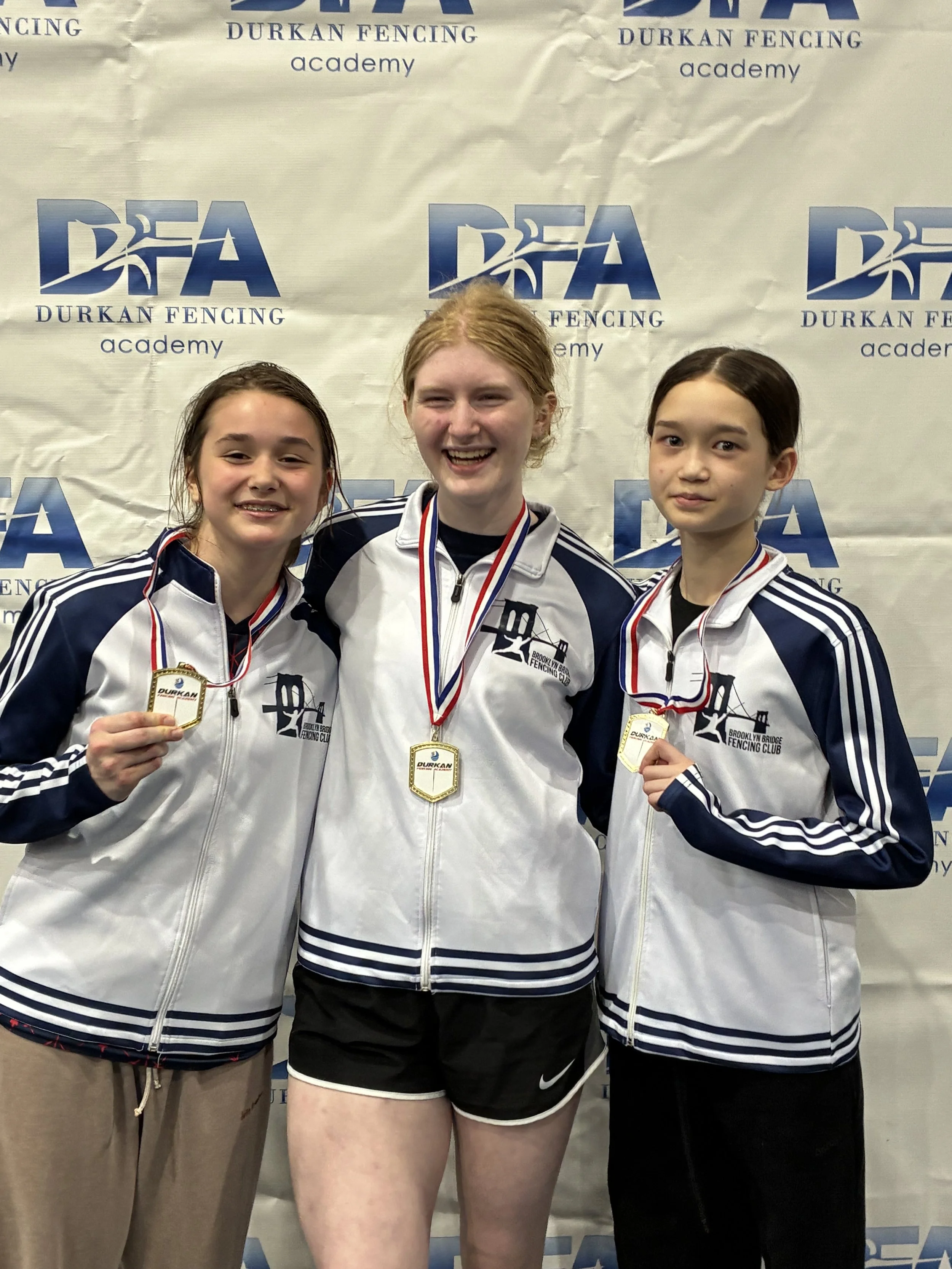
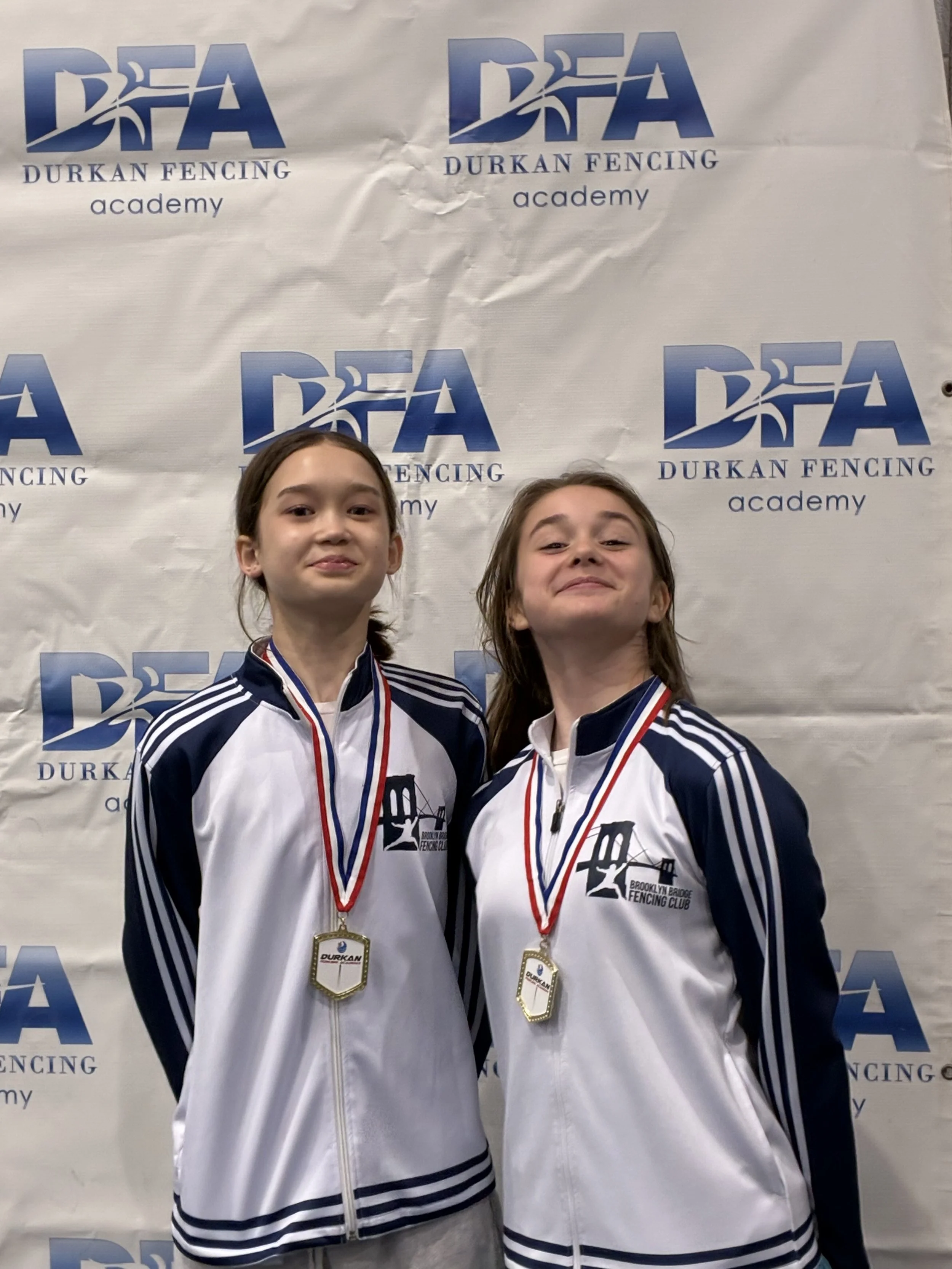
Brooklyn Bridge Fencing Club brought home a gold medal and a wave of strong results from the Durkan Regional Showcase, held May 2-3, 2026. Our fencers competed across three B2-rated events - Cadet Men's Foil, Cadet Women's Foil, and Junior Women's Foil - and delivered performances that reflect the hard work they've been putting in every day on the strip.
We're proud of every fencer who competed this weekend. These results aren't accidents - they're a direct reflection of how hard our athletes are working to implement the BBFC system of fencing. When fencers commit to the process, trust the training, and put in the reps day after day, this is what happens on the competition strip. Here's the full breakdown.
Genevieve Murphy Wins Cadet Women's Foil Gold
Genevieve Murphy put together an outstanding tournament run to take the top spot in the Cadet Women's Foil event:
1st place 🥇 in Cadet Women's Foil, earning a B26 rating
6th place in Junior Women's Foil, earning regional points against a tough Junior field
Winning a B2-rated regional is a significant milestone. Genevieve's gold means she earned a B26 rating - a direct reflection of beating highly rated opponents across multiple rounds. She then turned around and finished 6th in the Junior Women's Foil event the next day, competing against older and more experienced fencers.
Annika Krahe Earns Two Bronze Medals in One Weekend
Annika Krahe delivered one of the most consistent weekends of any fencer at the tournament:
3rd place 🥉 in Cadet Women's Foil, earning points toward Summer Nationals qualification
3rd place 🥉 in Junior Women's Foil, earning points toward Summer Nationals qualification
Two podium finishes in two days, across two age divisions, is no small feat. Annika's B25 rating and her ability to compete at this level in both cadet and junior events show real depth and composure under pressure.
Isla Stewart makes Top-8
Our team's depth showed up on the podium and beyond:
Isla Stewart - 8th place in Cadet Women's Foil, earning a D26 rating!
Isla Stewart - 11th place in Junior Women's Foil, earning points toward Summer Nationals qualification
Annabelle Hussian - 10th place in Cadet Women's Foil, earning points toward Summer Nationals qualification
Isla competed in both events and earned a new D26 rating in the process - proof that she's building momentum this season. Annabelle's Top-16 finish in a field of 58 fencers puts her solidly in the competitive mix at the regional level.
Aeden Lee Represents BBFC in Cadet Men's Foil
33rd place in Cadet Men's Foil (62-fencer field), earning points toward Summer Nationals qualification
Aeden competed in one of the largest draws of the weekend and came away with regional points. Every tournament at this level is a learning opportunity, and gaining experience in a 62-person B2-rated field is exactly how competitive fencers develop.
A Weekend That Shows What the BBFC System Can Do
A gold medal, two bronze medals, a Top-8 finish, and multiple Top-16 placements across three events in one weekend. New ratings earned, national points banked, and real experience gained against strong regional competition. Our fencers are putting in the work, trusting the BBFC system, and the results speak for themselves. We're excited to see where this momentum takes our team next.
What Are Fencing Ratings and National Points?
If you're newer to competitive fencing, here's a quick overview of how the results above translate into progress:
Ratings range from E (entry-level competitive) through A (highest). They're earned by defeating rated opponents at sanctioned tournaments. A higher rating reflects consistent success against stronger competition.
National points are awarded based on placement at sanctioned events. These points accumulate over the season and determine qualification for national championships like Summer Nationals and Junior Olympics.
B2-rated events like the Durkan Regional Showcase are mid-level sanctioned competitions where fencers can earn ratings up to B and collect national points toward qualifying for major championships.
When you see a fencer "earn a B26 rating," that means they performed well enough at this event to receive a B-level rating for the 2025-2026 season - a meaningful competitive benchmark.
What's Next for Your Family at BBFC?
Whether your child is already fencing competitively or just getting curious about the sport, we have a clear path to get started:
Ask about competitive pathways: If your child is already fencing and you want to explore what a results-driven training environment looks like, we'd love to talk.
What to Expect at a Full Day Fencing Summer Camp (Updated 2026)
Signing your child up for a full-day fencing camp means trusting strangers with your kid for eight hours a day. It's a sport you might know nothing about. That's a lot to take on faith.
This guide covers what to expect at a full day fencing summer camp. It covers the schedule, what to pack, how kids are grouped, and what skills they'll learn.
What a full day fencing camp schedule looks like
Full-day fencing camps run from around 9am to 5pm, and the day mixes skill instruction, games, conditioning, and supervised sparring. Beginners spend time on fundamentals like footwork and blade work, while experienced fencers focus on tactics and bouting. The structure keeps kids engaged without wearing them out—mornings build skills, afternoons put those skills to the test.
At Brooklyn Bridge Fencing Camp, the schedule is broken into blocks with built-in variety. No one sits still for hours drilling the same thing.
Morning warm-up and games
The day kicks off with dynamic stretching and agility games. These aren't filler activities—they build the coordination and reaction time fencers use throughout the day. Kids who arrive nervous or quiet tend to loosen up quickly once they're moving and laughing with the group.
By the time warm-ups wrap, campers are ready to pick up a weapon.
Footwork and blade work instruction
Mid-morning shifts to technical fencing. Footwork covers the basics:
En garde: The balanced ready position fencers return to between actions
Advance and retreat: Controlled steps forward and backward
Lunge: The explosive forward attack
Recover: Returning to en garde after a lunge
Blade work introduces parries (defensive blocks with the weapon), attacks, and how to control distance from an opponent. Coaches break everything down step by step, so even kids who've never touched a foil can follow along. Repetition is the goal here—campers drill movements until they start to feel natural.
Lunch and social time
Campers eat together and have supervised free time to decompress. This is where friendships form. Kids compare notes on what they've learned, trade stories, and recharge for the afternoon.
Lunch typically runs 45 minutes to an hour, which gives everyone a real break before the second half of the day.
Afternoon drills and tactical training
Afternoons focus on applying morning skills in more dynamic situations. Tactical exercises teach campers how to read an opponent, set up attacks, and respond to different fencing styles. Partner drills and game-based learning keep things engaging while reinforcing technique.
Coaches also introduce more advanced concepts for campers who are ready—things like timing, distance management, and simple attack combinations.
Open bouting and cool down
The day ends with open bouting, which means supervised practice matches against other campers. Bouting is where everything comes together: footwork, blade work, tactics, and mental focus. Coaches referee each bout and give feedback between touches.
A cool-down period follows—stretching, reflection on the day, games, and sometimes a quick group discussion. Kids leave tired but with a clear sense of what they accomplished.
What to bring to fencing camp
Packing for fencing camp is straightforward. Most programs provide all the fencing equipment, so your job is to send your child prepared for an active day.
Clothing and footwear
Athletic clothing: Comfortable shorts, long sweatpants, and 2 t-shirts
Court shoes or sneakers: Closed-toed sneakers are required. No flip-flops, sandals, or slides.
Hair ties: Long hair has to be secured so it fits under a fencing mask
Food and hydration
Packed lunch or money to buy lunch: Something that doesn't require refrigeration or heating
Snacks: Granola bars, fruit, or crackers for energy between sessions
Refillable water bottle: Fencing is physically demanding, and kids go through a lot of water
If your child has allergies, label everything clearly. Many camps have nut-free policies.
Personal items and extras
Personal entertainment: We suggest books, cards, or board games for breaks
Change of clothes: Fencing gear gets warm, and a fresh shirt for pickup is nice
Small backpack: To keep everything organized
Leave valuables and electronics at home. They're distractions, and camps typically don't have secure storage for them.
Do you need to buy fencing equipment?
No. Most beginner fencing camps provide all equipment at no extra cost. At Brooklyn Bridge Fencing Camp, we provide all necessary equipment.
Returning or competitive fencers who own their own gear can bring it, but it's not required. You don't have to invest in equipment until your child decides to continue with the sport beyond camp.
How campers are grouped by age and skill level
Full-day camps separate children into age-appropriate and skill-appropriate groups. A 7-year-old beginner won't be sparring against a 14-year-old with tournament experience.
This structure keeps beginners from feeling overwhelmed and gives experienced fencers the challenge they're looking for. Coaches adjust groupings as the week progresses if a camper is ready to move up.
What your child will learn at fencing camp
Fencing camp delivers real skill development alongside physical and mental growth. Here's what parents can expect their child to come away with after a week.
Fencing fundamentals and footwork
Every camper learns the foundational movements—en garde, advance, retreat, lunge, and recover. These form the base of everything else in fencing. By the end of camp, even complete beginners can execute basic footwork patterns without thinking about each step.
Blade techniques and tactics
Campers learn how to attack, defend, and respond:
Attacks: Direct thrusts to score touches
Parries: Blade movements that block incoming attacks
Ripostes: Attacks immediately after a successful parry
Basic tactical thinking gets introduced through drills and bouting. Campers learn when to attack versus when to wait, how to create openings, and how to recognize patterns in an opponent's movements.
Rules and etiquette of the sport
Fencing has traditions that go back centuries. Campers learn to salute opponents before and after bouts, shake hands, and conduct themselves with sportsmanship.
They also learn scoring basics. For foil fencers, this includes right-of-way, which determines who gets the point when both fencers hit at the same time.
Conditioning and coordination
Fencing builds agility, balance, reaction time, and explosive power. These athletic benefits are woven throughout the day—not just in dedicated conditioning blocks but in every drill and bout.
Drop-off and pick-up times and extended care options
Working parents often ask about flexibility beyond standard camp hours. Here's how timing typically works.
Standard camp hours
Full-day fencing camps generally run 9am–5pm, Monday through Friday. Check-in usually starts 10–15 minutes before the official start time. Pickup is prompt at the end of the day.
Early drop-off and late pick-up
Many camps offer extended care for an additional fee. At Brooklyn Bridge Fencing Camp, early drop-off and late pickup options are available for families who want them.
Tip: If you're interested in extended care, confirm availability when you register—spots can fill up quickly during popular weeks.
How to prepare your child for their first fencing camp
A little preparation goes a long way toward a smooth first day.
1. Talk about what to expect
Walk through the daily schedule with your child. Explain that they'll meet new kids, learn a new sport, and that no experience is required. Knowing what's coming reduces first-day anxiety.
2. Practice basic athletic readiness
Fencing is physically demanding. If your child isn't used to sustained activity, encourage some general fitness in the weeks before camp—running, jumping, stretching. This helps them keep up without getting exhausted by mid-afternoon.
3. Pack the night before
Use the packing list above and get everything ready the evening before. Morning stress is real, and a packed bag eliminates one variable.
What happens after fencing camp ends
Camp is often the starting point for a longer fencing journey. Kids who enjoy the experience can continue with group classes, private lessons, or a structured competitive program.
After fencing camp at Brooklyn Bridge Fencing Club, children will be ready to join our ongoing classes during the school year
Why full day fencing camp builds confidence and lasting skills
Beyond the technical skills, fencing camp develops focus, discipline, problem-solving, and resilience. Kids learn to handle pressure, recover from setbacks, and compete with grace. The social connections matter too—campers often form friendships that last well beyond the summer.
Full-day camps offer enough time for real progress. Knowing what to expect at a full day fencing summer camp helps families feel confident before the first session. By the end of a week, even complete beginners can fence a bout and understand the basics of the sport.
Ready to see if fencing camp is right for your child? Contact us to learn more about Brooklyn Bridge Fencing Camp.
FAQs: what to expect at a full day fencing summer camp
Does my child need prior fencing experience?
No. Beginner camps are designed for children with no experience, and all fundamentals are taught from scratch.
What is the typical staff-to-camper ratio at fencing summer camps?
Ratios vary by program, but quality camps maintain small groups to allow for personalized instruction and safety during bouting. At Brooklyn Bridge Fencing, we aim for a 6:1 student to coach ratio to maintain the highest quality fencing instruction
What safety measures are in place during fencing camp bouting sessions?
Campers wear full protective gear, and are supervised by trained coaches during all sparring.
Can my child attend just one week of fencing summer camp?
Yes. Most camps offer flexible weekly enrollment, so families can choose the weeks that fit their schedule.
What happens if my child gets tired or frustrated at camp?
Coaches build in rest breaks, activity variety, and emotional support to keep campers engaged and positive throughout the day.
BBFC Fencers Deliver Strong Results at April NAC & Empire United Youth Foil Series
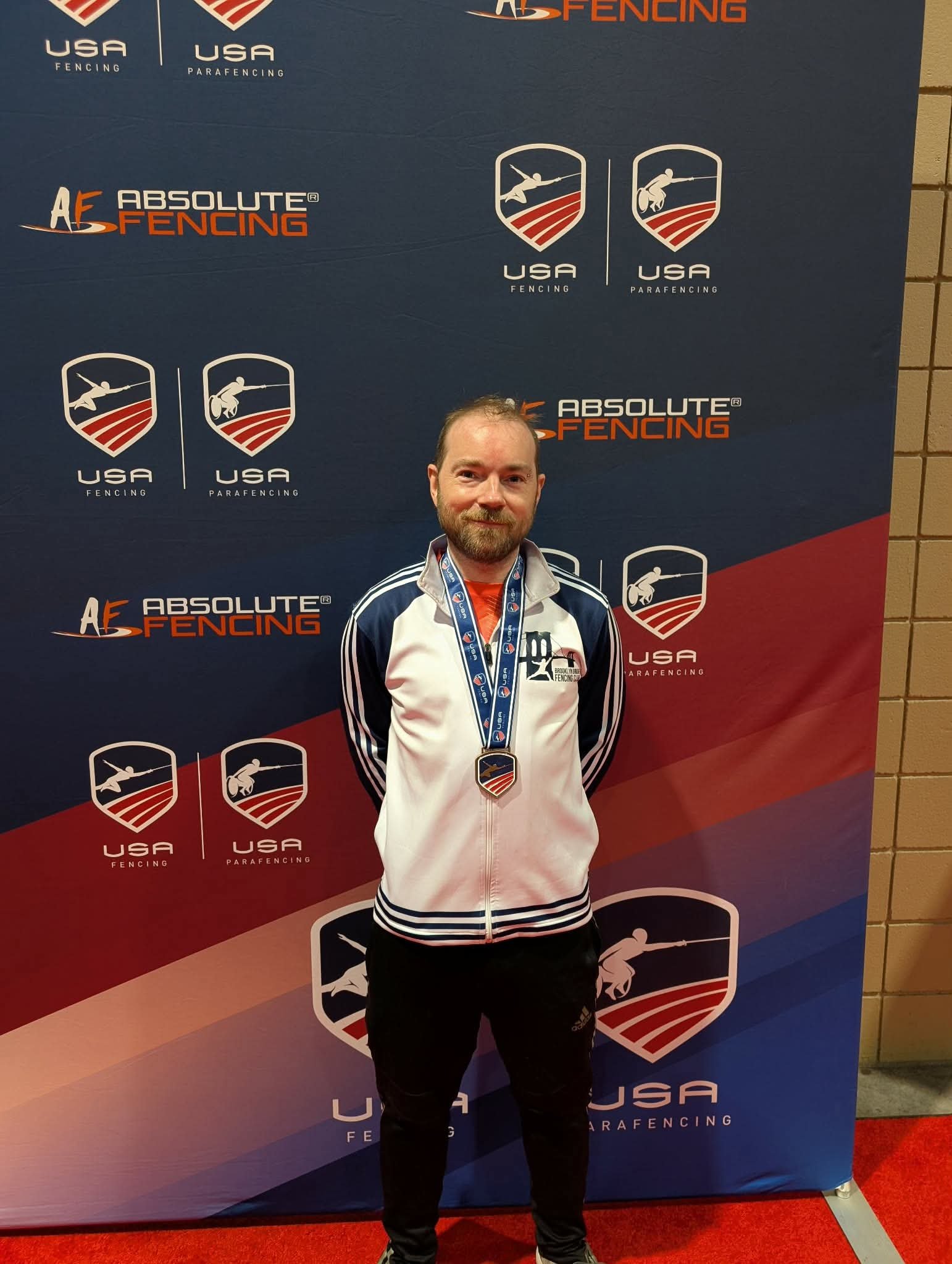
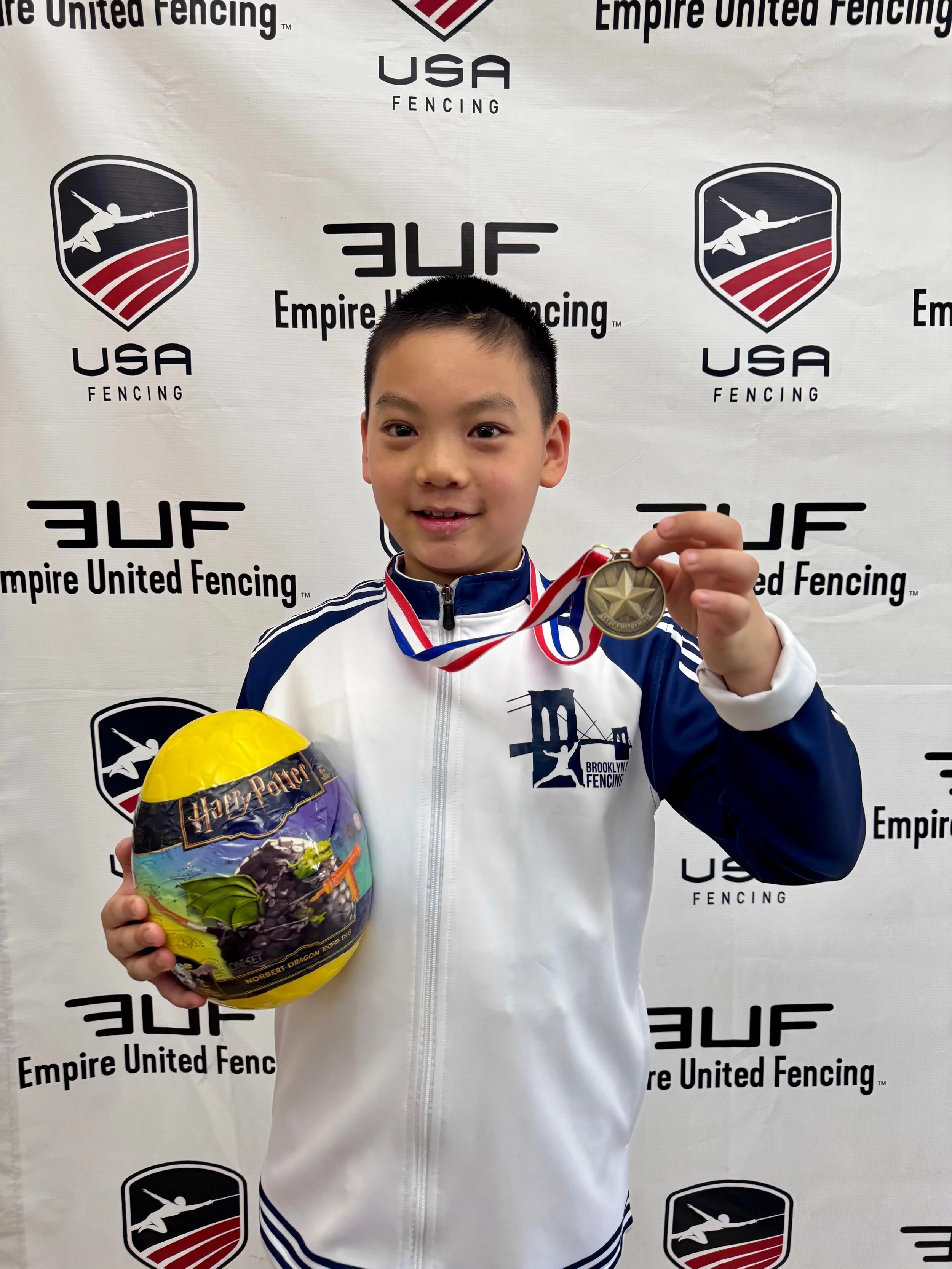
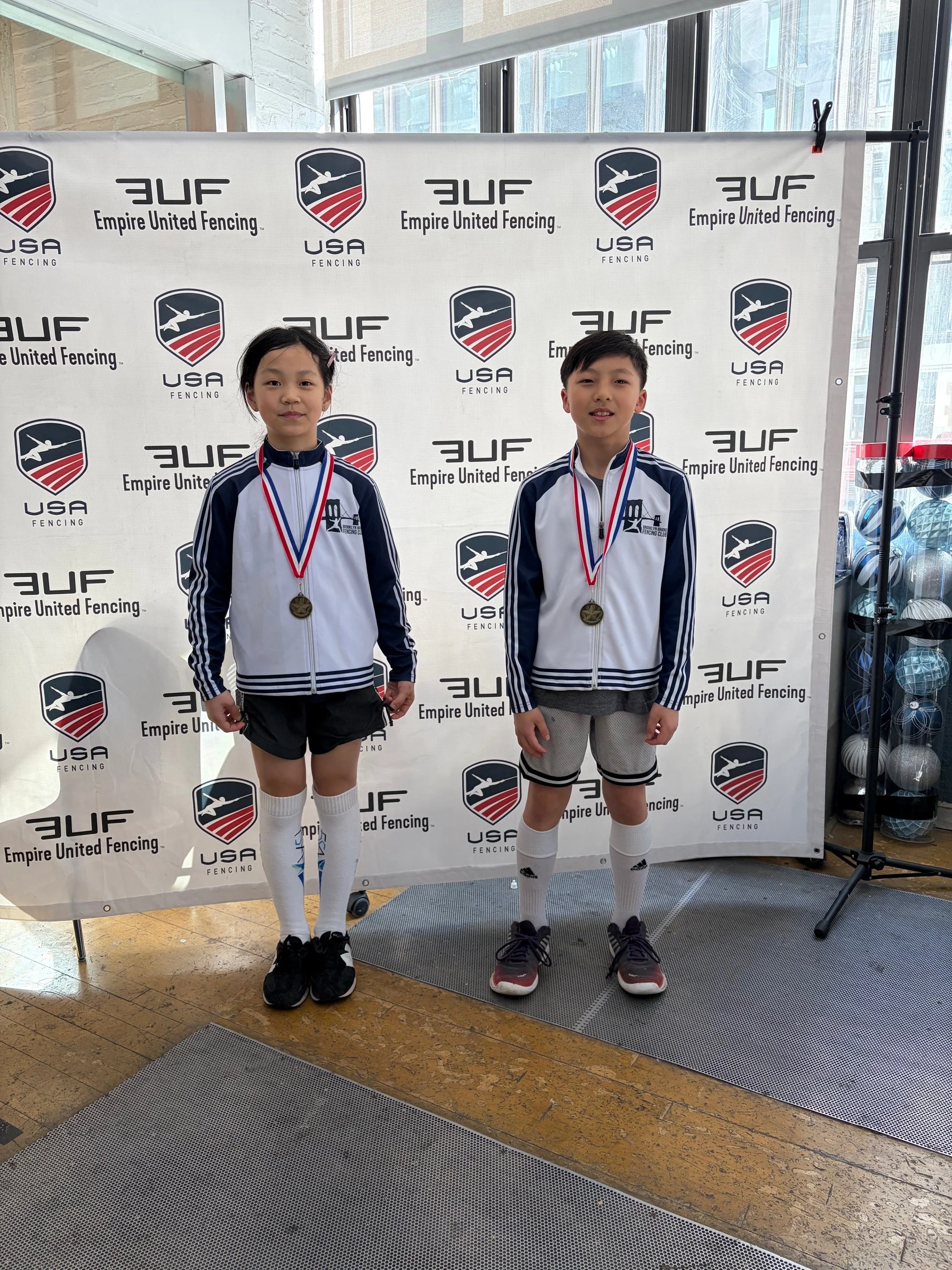
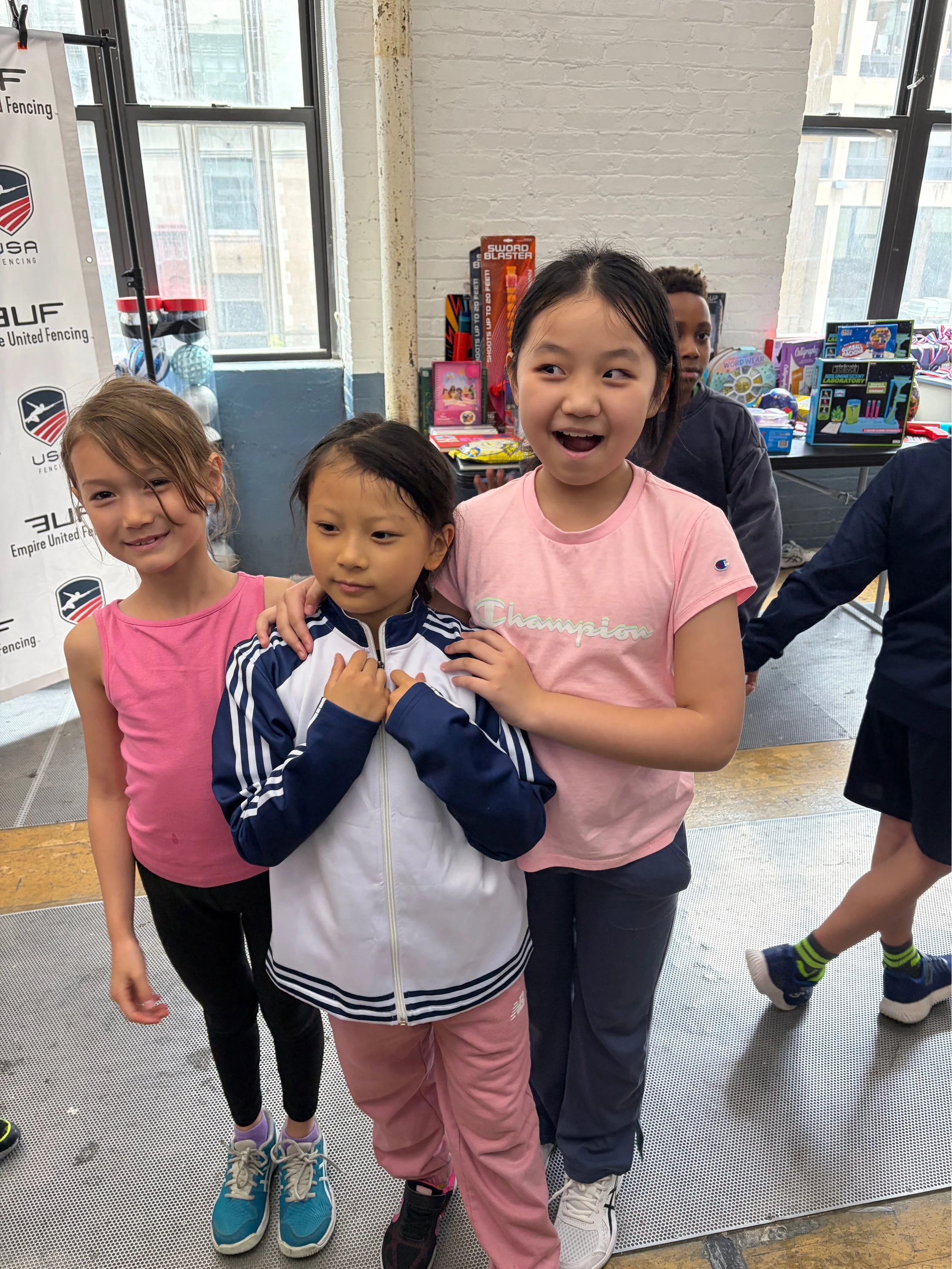
It was a great weekend for Brooklyn Bridge Fencing Club, with strong performances both nationally and locally.
From Coach Michael Green competing at the April North American Cup (NAC) in Richmond to our younger fencers taking the podium in Manhattan, it’s exciting to see the continued growth across all levels of the program.
Coach Michael Green Earns C Rating at April NAC
At the national level, Coach Michael Green put in an excellent performance against a deep field of experienced competitors:
12th Place – Vet 40 Men’s Foil
6th Place – Vet Combined Men’s Foil
His results also earned him a C26 rating, a great milestone and a reflection of his ongoing commitment to training and competition.
Youth Fencers Bring Home Medals in Manhattan
Closer to home, BBFC fencers had a fantastic showing at the Empire United Youth Foil Series, with podium finishes across multiple age groups.
🥇 Gold Medal
Dean Chiang – 1st Place, Y8 Men’s Foil
🥉 Bronze Medal Finishes
Sadie Wong – 3rd Place, Y8 Women’s Foil
Alexander Lin – 3rd Place, Y12 Men’s Foil
Evelyn Gao – 3rd Place, Y12 Women’s Foil
Strong Finishes
Eva Shang – 5th Place, Y8 Women’s Foil
Honorable Mentions
Jordan Kreiling – Top 16
Emery Huang – Top 16
A Strong Showing Across the Board
Overall, BBFC fencers came away with 1 gold medal and multiple podium finishes, with representation and success in every event we entered.
That kind of consistency is what we love to see—it speaks to the hard work our fencers are putting in week after week, and the steady development happening across the club.
What’s Next for BBFC Fencers?
As we head into the next stretch of the season, this momentum is something to build on.
For families whose kids are enjoying fencing, this is a great time to:
Add an extra day of training
Start weekly private lessons
Begin thinking about competing more regularly
Looking Ahead
We’re excited to see what’s next as our fencers continue to grow and challenge themselves.
Congratulations to all of our athletes and Coach Michael on a fantastic weekend!
How to find the right fencing club near you: a coach's guide
If you've searched "fencing clubs near me," you've probably found a list of club names, addresses, and maybe some photos of kids in masks holding swords. What you haven't found is how to tell which one will actually help you or your child progress.
The difference between a good fencing club and a great one comes down to three things: coaching credentials, program structure, and culture. A club with Olympic-level coaches and a clear development path can transform a curious kid into a competitive fencer — or give an adult beginner a sport they'll enjoy for decades.
This guide walks through exactly what to look for, what to ask, and what red flags to avoid — from someone who's coached thousands of beginners over 15+ years.
Where to search for fencing clubs
If you've typed "fencing clubs near me" into Google, you've seen a list of names and addresses — but how do you know which ones are worth visiting? Start by building a shortlist from these sources.
USA Fencing Club Finder is the place to start. This is the official directory of registered clubs in the United States. You can search by ZIP code and filter by weapon (foil, epee, or saber) and program type (youth, adult, competitive, recreational). A club listed here has paid its USA Fencing dues and has coaches with at least basic certification — which is a minimum threshold, not a guarantee of quality.
Google Maps and "fencing clubs near me" searches are useful for finding clubs that might not be registered with USA Fencing, or for seeing reviews and photos. But proximity alone doesn't tell you anything about program quality. A club 10 minutes away with no structure is worse than one 30 minutes away with clear progression.
Local recreation departments and community centers sometimes host beginner fencing programs that don't appear in national directories. These are often run by part-time instructors and may be fine for a first taste, but rarely offer long-term development.
Ask other parents. Word of mouth is underrated. If you know families whose kids fence — through school, sports leagues, or your community — ask where they train and whether they'd recommend it. Parents who've been in the sport for a year or two can tell you what the club is actually like, not just what the website says.
Build a shortlist of 2–4 clubs within a reasonable commute. Then evaluate them using the criteria below.
What to look for in a fencing club
Coaching credentials that actually matter
SafeSport certification is non-negotiable. This means coaches have completed background checks and abuse-prevention training through the U.S. Center for SafeSport. If a club can't confirm SafeSport compliance, walk away. Every legitimate club will have this.
Look for coaches with competitive experience at the national or international level — not because they'll turn your child into an Olympian, but because they understand what it takes to develop fencers. A coach who's competed at high levels knows how technique connects to tactics, how to prepare fencers mentally, and what pathway development looks like.
Ask how long coaches have been teaching, not just competing. A former national champion who started coaching last year is less experienced than someone who's been teaching for 15 years. At Brooklyn Bridge Fencing Club, for example, our founder Dan Kellner — an Olympian, Olympic coach, and U.S. Fencing Hall of Fame member — has been coaching in Brooklyn since 2008. That kind of sustained teaching experience, combined with elite competitive background, is what produces consistent results.
Facility, equipment, and class size
A fencing club doesn't need to look fancy, but it does need to be functional and safe. Look for:
Clean, well-maintained space — enough room for footwork drills, not just bouting
Proper number of strips for the class size — fencers shouldn't be standing around waiting
Well-maintained equipment — masks without rust, jackets without tears, functioning electric scoring equipment
Most clubs provide loaner gear for beginners. You should not need to buy anything for your first several months. If a club requires you to purchase equipment before you've even tried a class, that's unusual — and often a red flag.
Class size matters. For group instruction, at BBFC we maintain a 6:1 student-to-coach ratio, while shopping around look for a ration no higher than 8:1. Anything larger and individual correction becomes impossible. A class of 16 kids with one coach is crowd management, not fencing instruction.
Class structure and progression path
A well-run club has a clear beginner pathway. This typically looks like:
Intro lesson — a single private or small-group session to learn the basics
Beginner group classes — structured curriculum covering stance, footwork, blade work, and rules
Intermediate level/Competitive track — more advanced tactics and technique, tournament preparation, advanced training
At Brooklyn Bridge Fencing Club, for instance, we start children as young as 5 with a $49 Private Intro Lesson where they learn en garde, advance, retreat, lunge, and the rules of the sport. From there, they can move into our Intro Package (2 private lessons + 2 group classes), then into ongoing beginner fencing classes priced at $249–$499/month depending on frequency. This kind of documented progression is what you should expect from any serious club.
Beware clubs that throw beginners into open bouting with experienced fencers. That's a sign of poor structure. Beginners learn bad habits when they fence people far above their level, and they often get discouraged.
Ask what the first 3 months look like. If the club can't describe a structured curriculum, they probably don't have one.
Look for age-appropriate groupings. Children ages 4–6 shouldn't be mixed with teenagers. Developmental needs, attention spans, and physical capabilities are too different. A club that lumps all beginners together regardless of age isn't designing for learning.
Culture and community
Visit and observe a class before committing. Watch how coaches interact with students. Are instructions clear? Is correction constructive or harsh? Do students seem engaged or bored?
Consider whether the environment matches your goals:
Recreational-focused clubs emphasize fun, fitness, and participation
Competition-focused clubs emphasize development, tournament results, and progression
Many clubs offer both — but the culture often leans one direction
A strong club community keeps fencers engaged long-term. Look for clubs where families know each other, where older fencers mentor younger ones, and where the atmosphere feels welcoming rather than cutthroat.
Ask current members what they like about the club. If they struggle to answer, that tells you something.
How much does fencing cost?
Fencing isn't the cheapest sport, but it's more accessible than most people assume. Here's what to budget:
Intro or trial lessons: Typically $25–$75 for a single session. At BBFC, we charge $49 for a 20-minute private intro lesson with all equipment provided.
Monthly group classes: Expect $150–$500/month depending on your city, class frequency, and program level. Higher-cost cities like New York tend toward the upper range. At BBFC, our Beginner Classes run $249/month for once-a-week training or $499/month for unlimited classes. For a more detailed breakdown, see our guide to fencing costs in Brooklyn.
Equipment: Most clubs provide loaner gear for beginners. When you're ready to buy your own — typically after 3–6 months — a starter set (mask, jacket, glove, weapon) runs $200–$400. You don't need to buy immediately, and you shouldn't feel pressured to.
Tournament fees: Once you start competing (usually 6–12 months in), local tournaments cost $50–$125 per child per event. Travel, hotels, and entry fees for regional or national events add up, but these are optional and come later.
Club membership fees: Some clubs charge an annual membership (often $500–$2100) in addition to class tuition. This typically covers insurance and facility maintenance. Our Annual Membership is currently $700 and you can read our policy about it here.
The biggest cost variable is geography. Clubs in major cities charge more — but they also tend to offer more structured programs, better coaching, and clearer pathways. A cheaper club with disorganized instruction isn't a bargain.
What age can you start fencing?
Ages 4–6: Some clubs offer pre-fencing programs focused on coordination, balance, and basic footwork using foam swords or modified equipment. These classes are shorter (30–45 minutes) and emphasize fun over technique. Not every club serves this age group — ask specifically. At BBFC, we offer classes for children as young as age 4, with Saturday sessions designed for this developmental stage.
Ages 7–10: This is the most common starting age. Kids can learn proper weapon handling, basic tactics, and participate in structured group classes. At this age, most children can follow multi-step instructions, maintain focus for 60–90 minutes, and begin understanding the strategic elements of fencing.
Ages 11–16: Teenagers pick up the sport quickly. They can start competitive training relatively fast and often reach tournament-ready in 6–12 months of consistent practice. This is also the age range where college recruiting becomes relevant — more on that below.
Adults: There's no upper age limit. Many clubs have dedicated adult beginner programs, and fencing is low-impact enough for lifelong participation. The footwork builds leg strength, the tactical elements keep your mind engaged, and the sport attracts people well into their 60s and 70s. However, at BBFC, we do not offer fencing for adults.
When evaluating clubs, ask:
What's your youngest age group?
How are classes structured for different ages?
Do 4-year-olds train separately from 10-year-olds?
A club that lumps all children together regardless of age isn't thinking carefully about development.
Questions to ask before you join
Bring this checklist to club visits or phone calls:
What does the first lesson look like, and is there a trial option?
What are the coaches' certifications and competitive backgrounds?
Is the club SafeSport compliant?
What gear is provided for beginners, and when will I need my own?
What's the class schedule, and how are students grouped by age and level?
What does the progression path look like — from beginner to intermediate to competitive?
Is there a competitive track, or is the program recreational only?
What's the monthly cost, and are there contracts or cancellation policies?
Can fencing here lead to college recruiting opportunities?
A good club will answer these questions clearly and directly. Hesitation or vagueness suggests they haven't thought these things through — or don't want to tell you.
Red flags to watch for
What should make you walk away from a fencing club? Here are the warning signs.
No SafeSport compliance — or reluctance to discuss coach backgrounds. This is the most serious red flag. Walk away.
No structured curriculum. If every class is just "open bouting," beginners aren't learning technique — they're forming bad habits while losing to more experienced fencers.
Coaches who can't describe a progression path. If they can't tell you what the first 3 months look like or how beginners advance, they're making it up as they go.
High-pressure sales tactics. Legitimate clubs don't need to push you into signing contracts before you've taken a class. Be wary of required multi-month commitments with no trial period.
Mixing beginners with advanced fencers in the same group class. This is frustrating for beginners and doesn't serve anyone's development.
Dirty or poorly maintained equipment. Rust on masks, torn jackets, broken weapons — these signal a club that doesn't take safety or quality seriously.
Trust your instincts. If something feels off during your visit, it probably is.
Can fencing help with college admissions?
Fencing is an NCAA-recognized sport with Division I, II, and III programs at dozens of universities, including Columbia, Penn, Notre Dame, Stanford, Ohio State, and many others. Recruited fencers can receive athletic scholarships and admissions advantages at highly competitive schools.
The recruiting pool is small. There are roughly 30,000 registered competitive fencers in the U.S. — compared to millions of soccer, basketball, or tennis players. This means a talented fencer has a realistic path to NCAA Fencing recruitment that's far less crowded.
Recruiting starts sophomore or junior year. College coaches look at national tournament results, rankings, and demonstrated improvement trajectory. Starting fencing at ages 8–12 gives the most runway for competitive development before this window opens.
Not every club prepares fencers for college. Ask about the club's track record: Have fencers from this club been recruited by NCAA programs? Which schools? A club that's never placed a fencer in a college program probably lacks the coaching depth or competitive structure to get you there.
At Brooklyn Bridge Fencing Club, we have a top-tier college recruiting ranking and have placed fencers in NCAA Division I programs. We're one of only six clubs nationwide to have produced Olympic and World Championship medalists in foil. This isn't typical — most clubs don't have this track record — but it shows what's possible when coaching and structure align.
What to expect at your first fencing class
You'll probably start with footwork basics — no weapon in hand for the first few minutes. Expect to learn the fundamental stance (en garde), how to move forward (advance), move backward (retreat), and attack (lunge).
Most clubs provide all equipment for your first session. Wear athletic clothes — a t-shirt, sweatpants or leggings — and clean indoor sneakers. Avoid basketball shoes or anything with excessive ankle support; you need to feel the floor.
Private intro lessons are typically shorter (20–45 minutes) and more personalized. You'll get individual attention and immediate feedback. Group introductions run longer (60–90 minutes) and let you see how group classes operate.
Don't worry about which weapon to choose yet. Most beginners start with foil, which has the smallest target area (the torso) and emphasizes clean technique. You can explore epee or saber later once you understand the basics. For more on getting started, see USA Fencing's Fencing 101.
You'll probably be sore the next day. Fencing uses muscles you didn't know you had — especially in your legs and core. This is normal.
The goal of your first class isn't to be good. It's to see whether you enjoy the sport and whether the club feels like a fit.
Frequently asked questions
Is fencing good for kids with ADHD?
Fencing requires intense focus — reading your opponent, making split-second decisions, executing precise movements. Many parents report that kids with ADHD thrive in fencing because the mental engagement is constant and the feedback is immediate. You touch or you get touched. There's no waiting around.
Do I need my own equipment to start fencing?
No. Most clubs provide loaner gear for beginners. You typically don't need your own equipment for the first 3–6 months. When you're ready to buy, a starter set runs $200–$400.
What's the difference between foil, epee, and saber?
Foil: Target area is the torso. Emphasizes clean technique and right-of-way rules. Most beginners start here. Epee: Entire body is valid target. No right-of-way — whoever touches first scores. Saber: Target area is everything above the waist. Fastest weapon; includes slashing motions.
How long does it take to get good at fencing?
Most fencers feel comfortable in basic bouts within 3–6 months of regular training. Competitive readiness — meaning you can enter a local tournament and hold your own — typically takes 1–2 years of consistent practice.
What should I wear to my first fencing class?
Athletic clothes (t-shirt, sweatpants or leggings) and clean indoor sneakers. The club provides all fencing-specific gear.
Can adults start fencing with no experience?
Absolutely. Many clubs have dedicated adult beginner programs. Fencing is low-impact, tactical, and accessible at any fitness level. Some of the most enthusiastic fencers I've coached started in their 40s and 50s.
Conclusion
The best fencing club for you is one with qualified coaches, a structured beginner program, and a welcoming culture — at a price you can sustain. Use the checklist and criteria from this guide when you visit or call clubs. Ask direct questions and trust your observations.
If you're in Brooklyn or New York City, Brooklyn Bridge Fencing Club offers a $49 intro lesson where you can experience the sport firsthand with Olympic-level coaching. Check our class schedule and book an intro lesson to see whether fencing is the right fit.
Ready to start? Contact Us to book your first lesson.
Join Us for Competitive Saber Camp with Former Hungarian European Medalist Balázs Kurucz
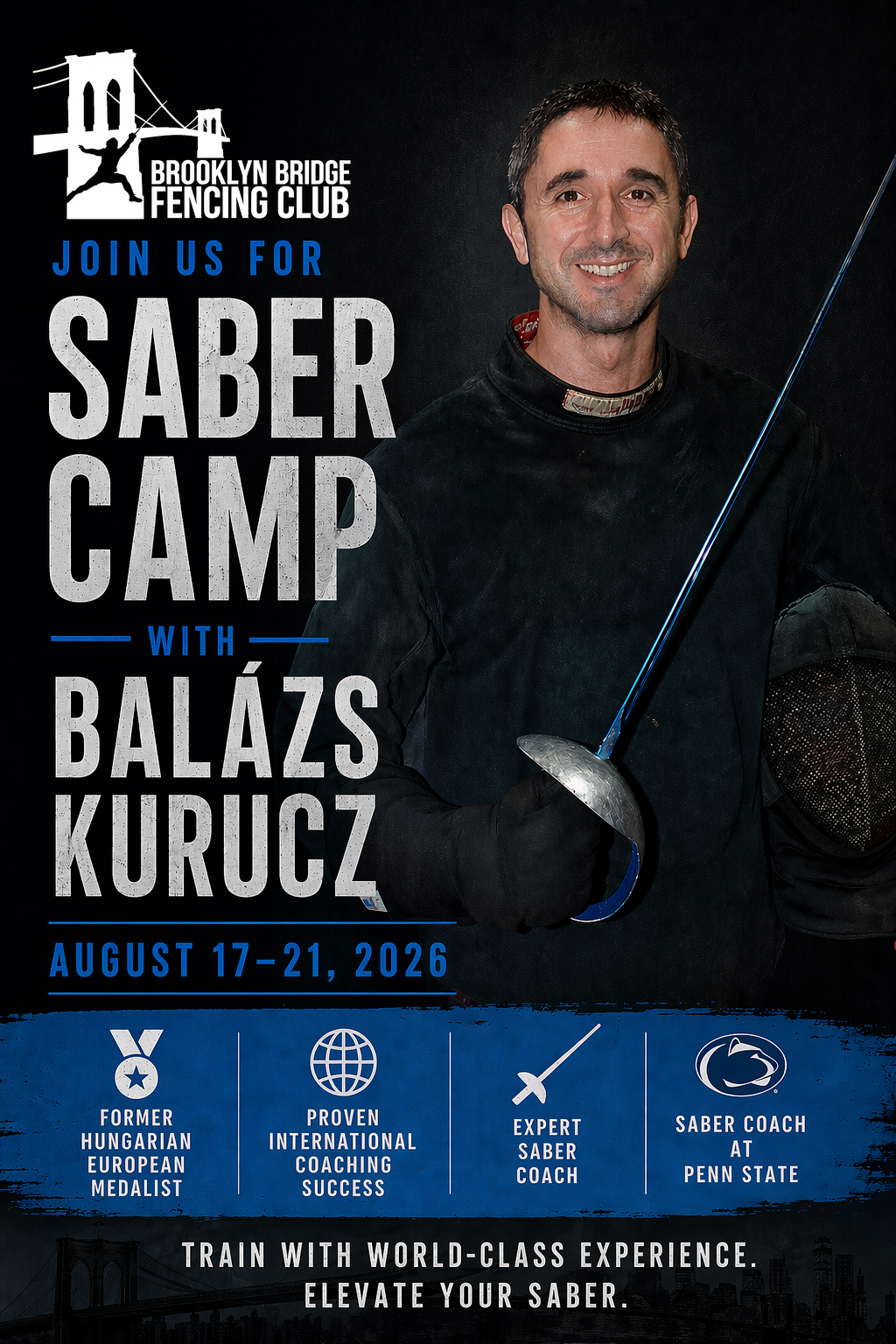
We’re excited to welcome former Hungarian European medalist and current Penn State saber coach, Balázs Kurucz, to Brooklyn Bridge Fencing Club for a special week of saber training this summer.
Balázs brings a wealth of international experience both as a competitor and as a coach. Now coaching at Penn State, he previously built a strong track record in Great Britain as a leading club coach and Head Coach of the Junior Women’s Saber Team.
Proven International Results
Balázs has developed athletes who have achieved top results on the international stage, including:
Junior World Championship titles
Multiple Cadet and Junior European medals
Consistent success on the Cadet European Circuit
Strong performances at World Championships
His experience developing fencers across all stages makes this an incredible opportunity for competitive athletes looking to improve.
Elite Competitive Background
As an athlete, Balázs was a multiple-time Hungarian National medalist and earned European U17 gold medals in 1995 and 1996.
His firsthand experience competing at a high level shapes the focused, technical, and demanding training environment he brings to every session.
Train with World-Class Experience
This is a unique opportunity to train with a coach who has consistently developed world-class fencers and brings proven international expertise to the strip.
Register Now
Join us for an exceptional week of saber training at Brooklyn Bridge Fencing Club.
BBFC Has a Big Weekend at the American Challenge and Metro Summer Nationals Qualifier
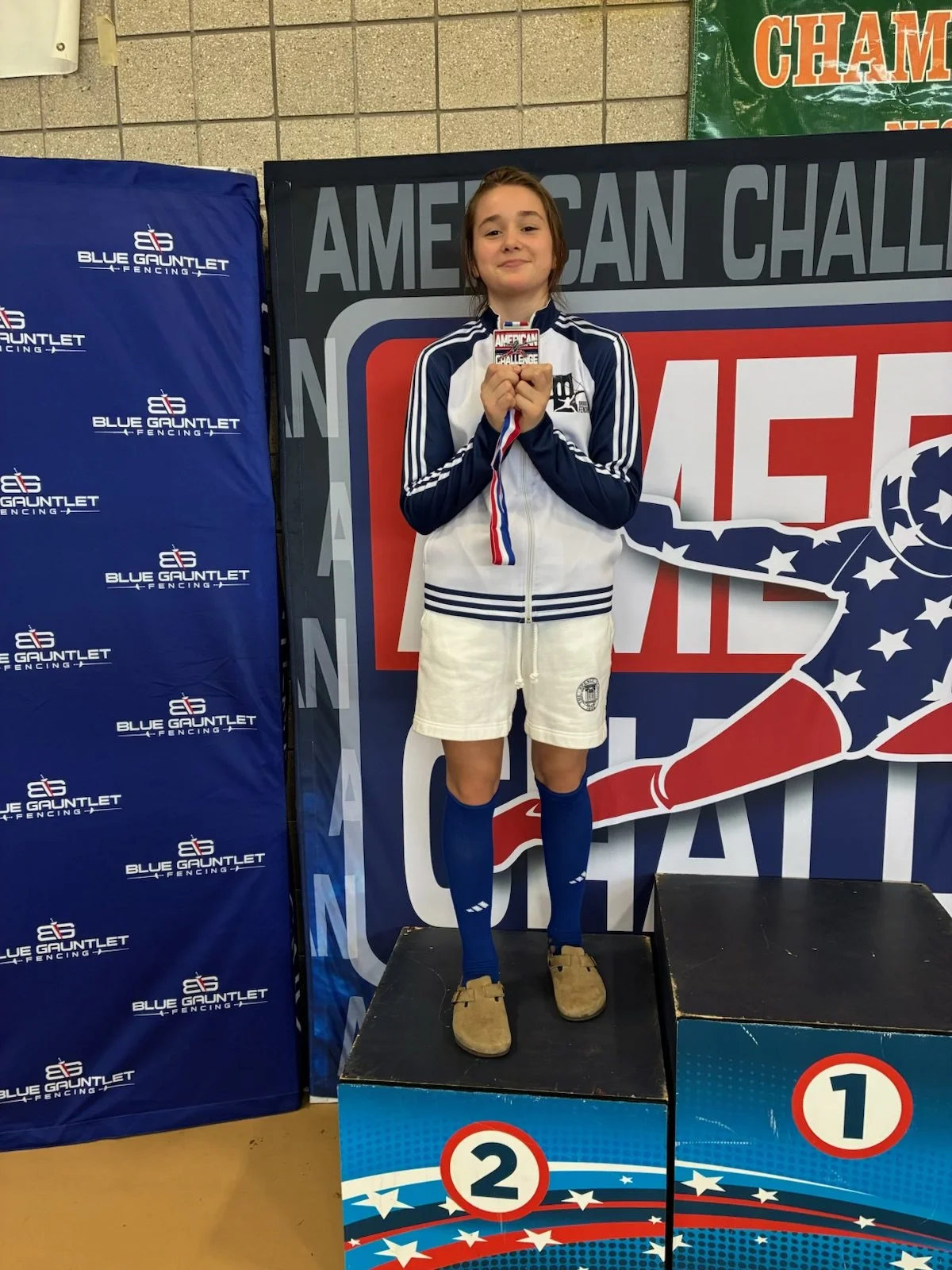
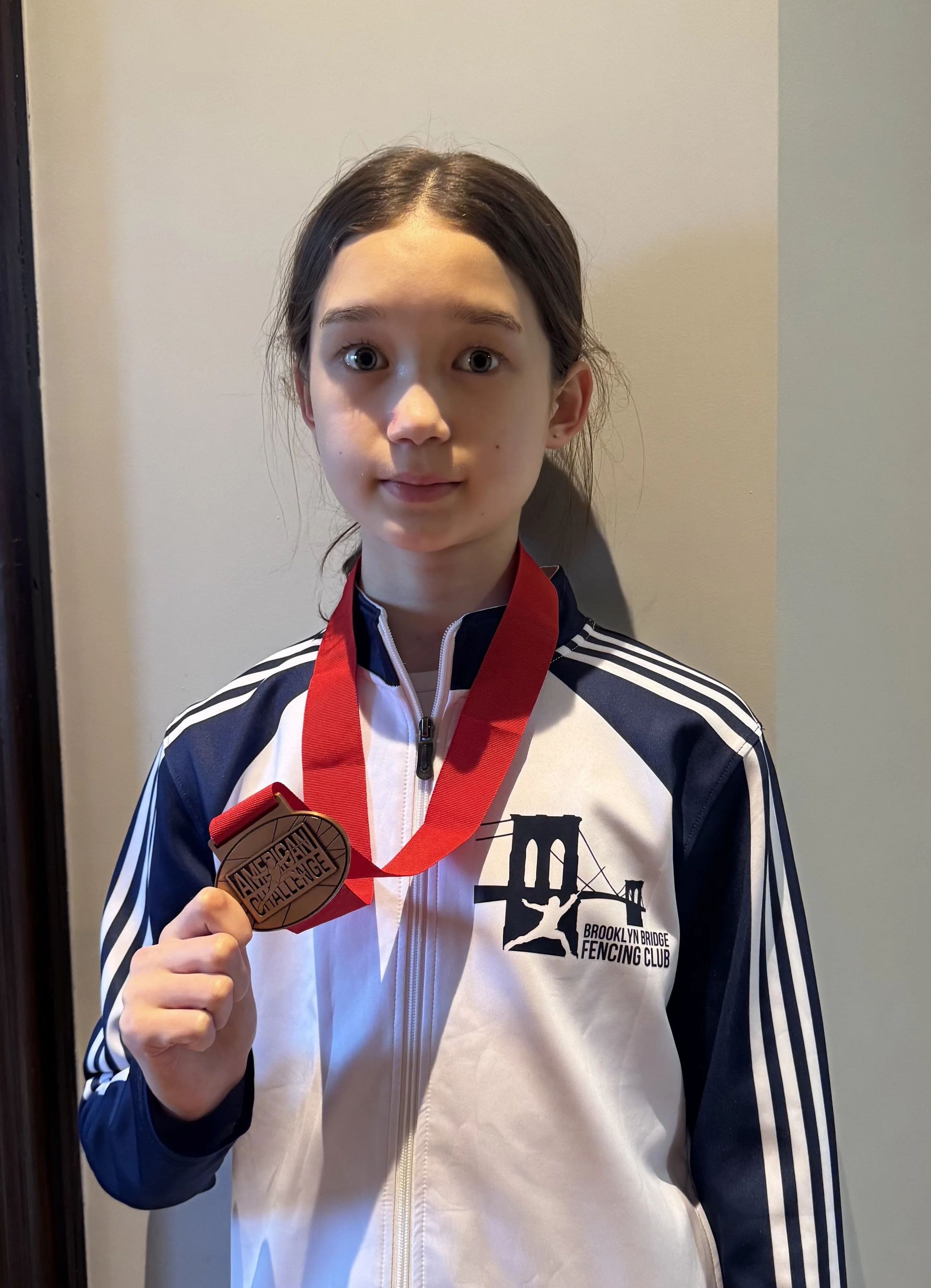
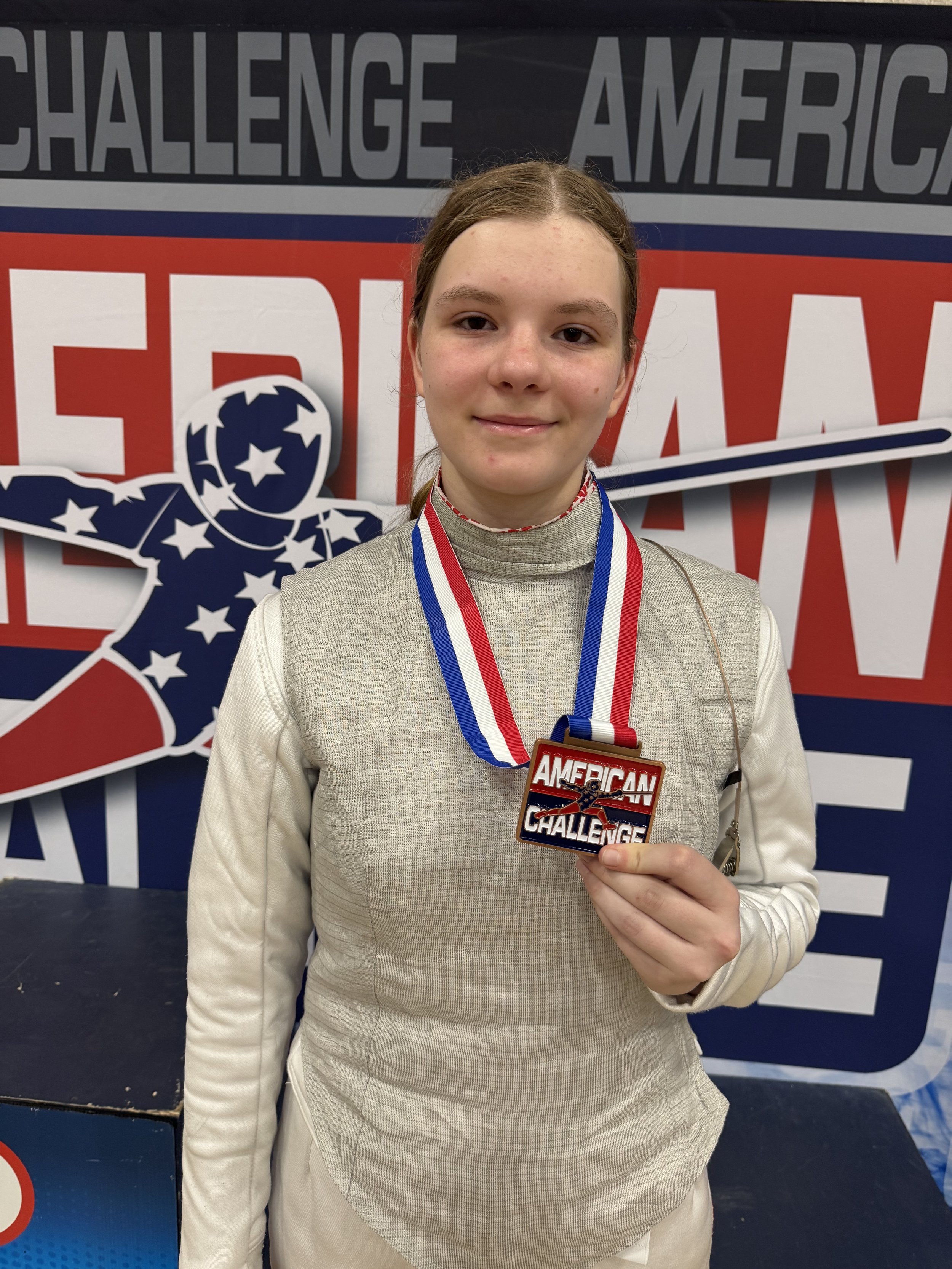
Brooklyn Bridge Fencing Club had an outstanding weekend of competition, with athletes excelling across two tournaments in foil and saber events.
Friday, April 17 opened with two standout performances at the American Challenge RJCC/RYC in Youth 14 Women's Foil. Neve Murphy was exceptional, finishing 2nd in a competitive field, while Annika Krahe added a 5th place finish in the same event — a remarkable one-two showing for BBFC. Also on Friday, Yian Vincent placed 7th in Youth 10 Men's Saber, and William Sohn turned in a solid 9th place in Youth 8 Men's Saber.
Saturday, April 18 brought more highlights at the American Challenge. Ana Kapran was the standout performer of the weekend, renewing her B26 with a 5th place finish in Cadet Women's Foil. Evelyn Gao also impressed with a 5th place finish in Youth 10 Women's Foil.
Also on Saturday, at the Metro Division Summer Nationals Foil and Epee Qualifier, Melody Fan took 1st place in Division II Women's Foil - a fantastic result - while Anna Gustafsson rounded out an excellent day for BBFC by finishing 3rd in the same event, qualifying them both for Div. 2 and Div. 3 Women’s Foil at the 2026 Summer National Championships.
Sunday, April 19 closed out the American Challenge with Annika Krahe placing 21st in Junior Women's Foil as the top BBFC result of the day, with Isla Stewart earning an E26 for her finish in the same event.
It was a great weekend for Brooklyn fencing. Congratulations again to Melody on her first place finish, Isla earning her E, Ana renewing her B, and Neve on her 2nd place finish at the American Challenge!
We're Looking for a Part-Time Foil Floor & Strip Coach!
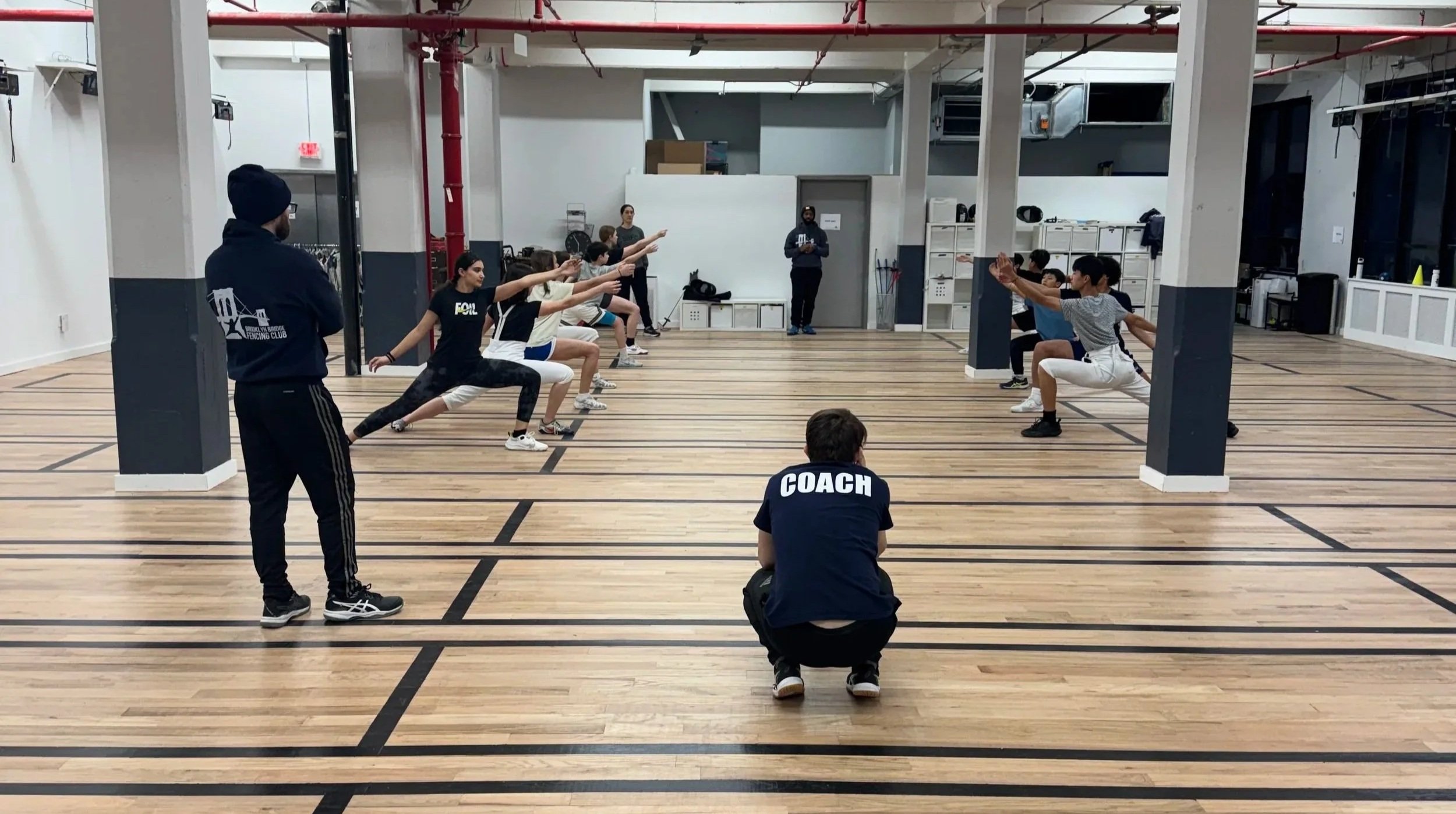
Brooklyn Bridge Fencing Club is seeking a motivated Part-Time Foil Floor & Strip Coach to help support our growing competitive and recreational programs. This role is ideal for a coach who enjoys working with athletes on the floor, maintaining an organized training environment, and supporting fencers during bouts both at the club and at competitions.
Responsibilities
Lead warm-up and footwork sessions for group classes and training sessions
Help maintain an organized training environment and ensure that fencers are actively fencing as much as possible
Provide strip coaching during bouts at the club
Provide strip coaching at local and regional tournaments for BBFC athletes
Time Commitment
Approximately 4 hours per week at the club
1–2 local or regional tournaments per month providing strip coaching support
Requirements
Authorized to work legally in the United States
Strong soft skills and a genuine enjoyment of working with children and teenagers
Current USA Fencing membership and coach status, with all required certifications up to date
Relevant foil coaching or competition experience
Driver’s license and the ability to rent a car for tournament travel
Additional Opportunities
If available, coaches may also attend BBFC coach education and training sessions to further develop their coaching skills.
Brooklyn Bridge Fencing Club is a welcoming, high-performance training environment that serves fencers of all ages and levels, from beginners to nationally competitive athletes. This role offers the opportunity to work closely with dedicated coaches and motivated students in a collaborative club setting.
Please email Dan Kellner at dan@brooklynbridgefencing.com if interested.
Brooklyn Bridge Fencing Featured on NY1
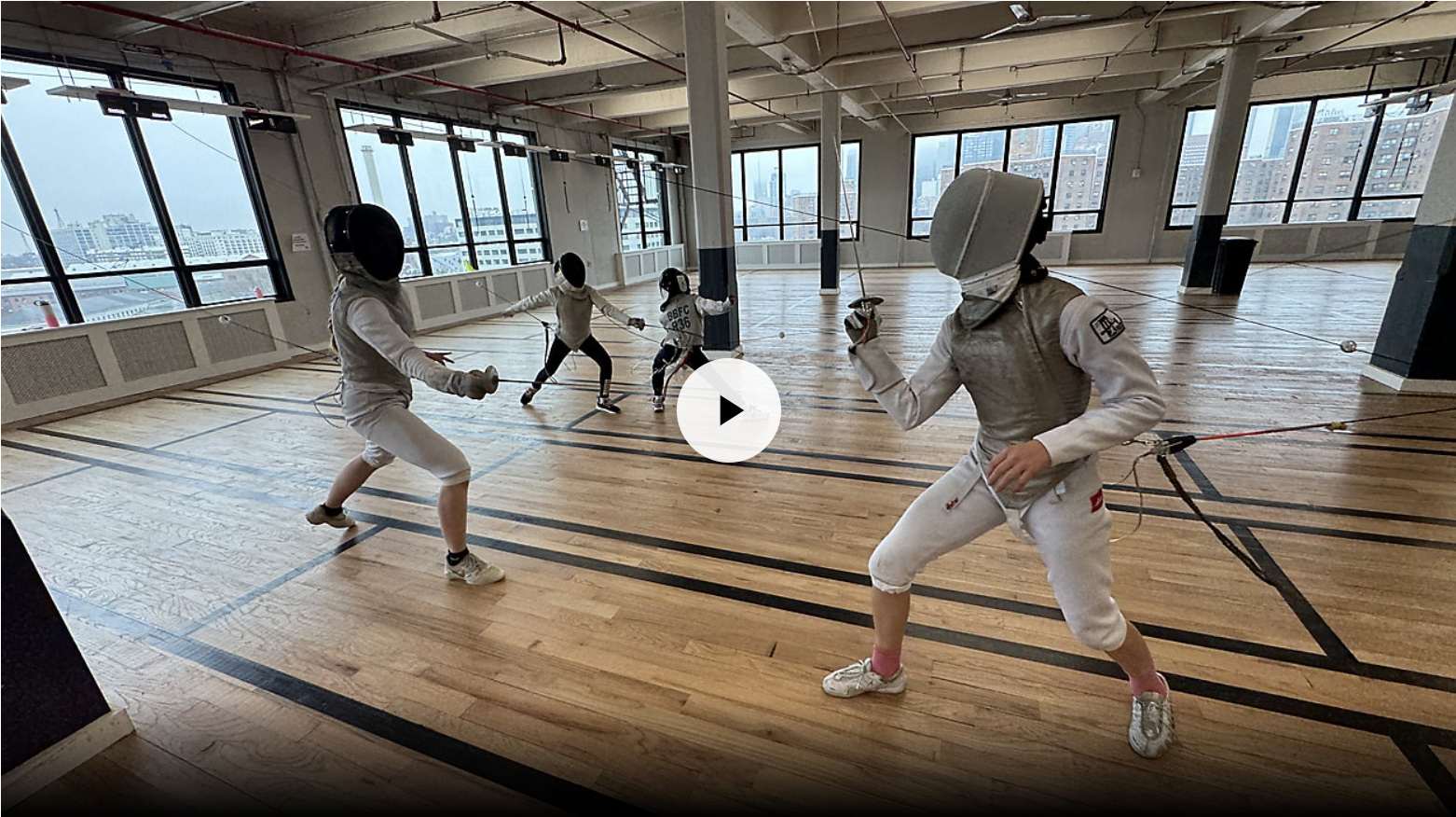
(Spectrum News NY1/Roger Clark)
Brooklyn Bridge Fencing Club was recently featured by NY1, highlighting the energy, growth, and community inside its new DUMBO facility at 295 Front Street. Founded in 2010 by Olympian and Olympic coach Dan Kellner, the club has grown into one of New York City’s premier fencing programs, training athletes from ages 5 to 18.
The segment captures the fast-paced, tactical nature of fencing—described as “a game of tag with metal sticks”—while showcasing the club’s state-of-the-art space, complete with 20 strips and electronic scoring systems. It also underscores BBFC’s strong competitive track record, with students earning national and international medals, and emphasizes the sport’s broader benefits, including confidence, creativity, and pathways to college recruitment.
BBFC Celebrates Competitive Success and a Landmark Week at Our New Home
Success on Two Continents!

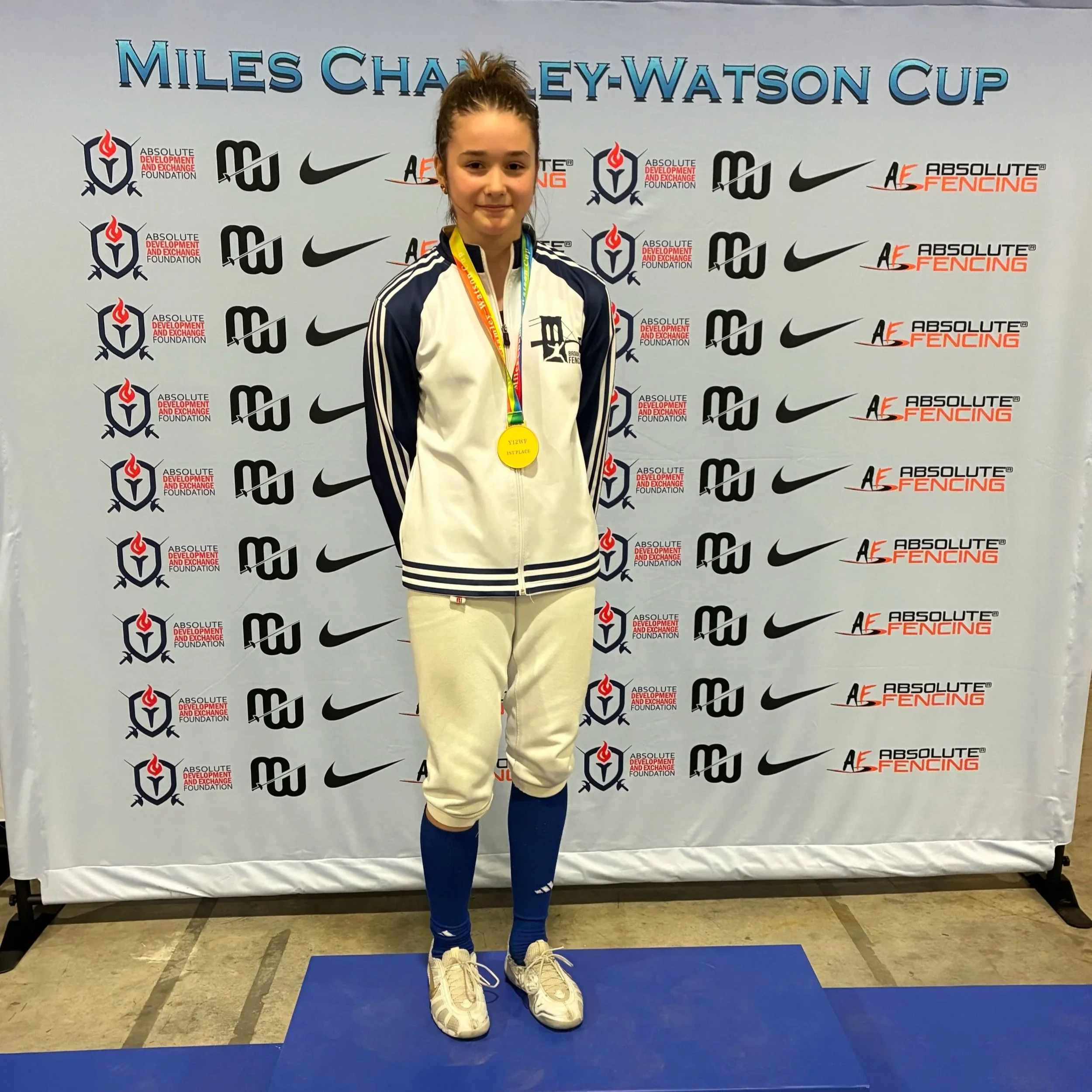
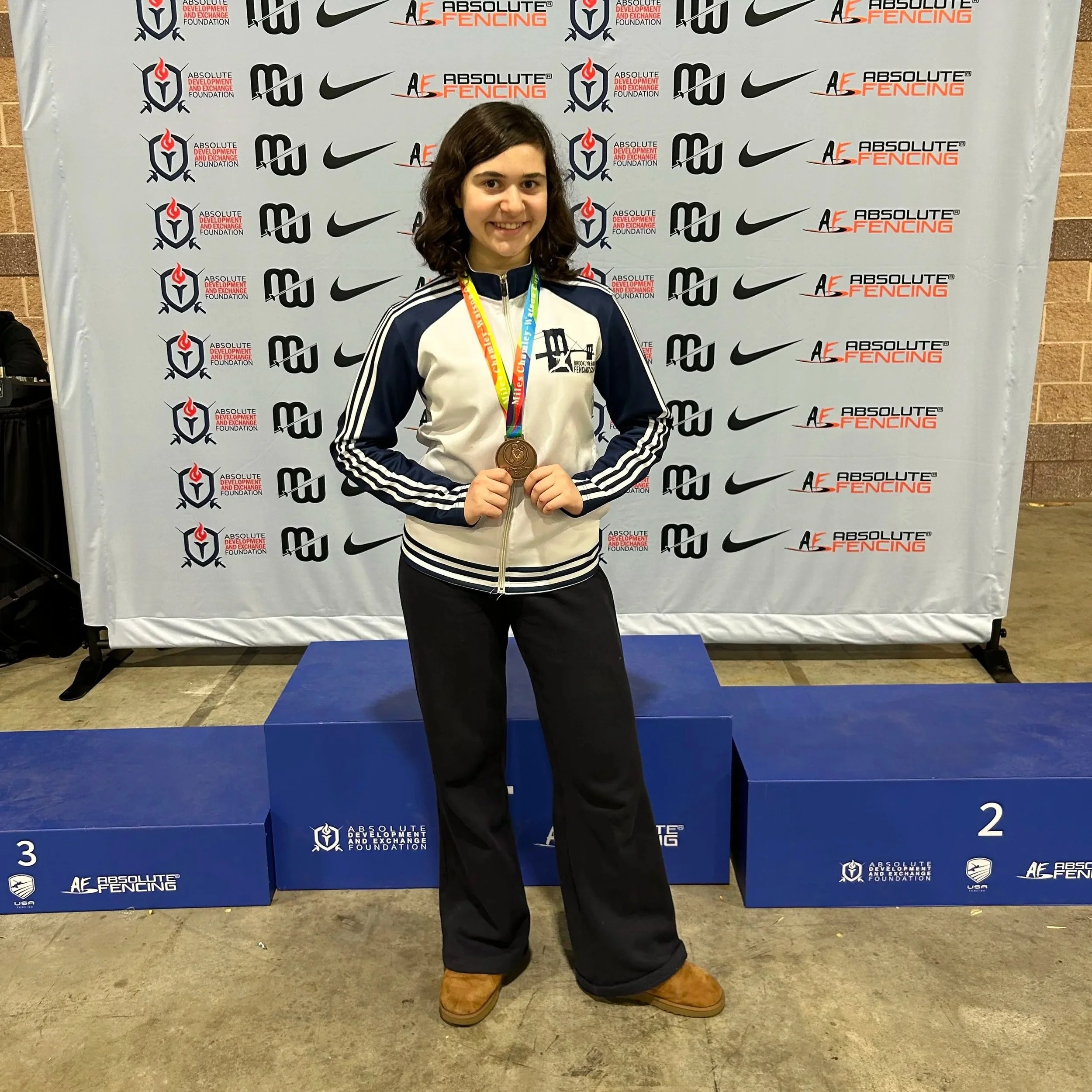
It’s been a remarkable week for Brooklyn Bridge Fencing Club, highlighted by standout competitive results across multiple levels and the exciting public debut of our new facility.
On the international stage, Annika Krahe delivered an exceptional performance at the Challenge Wratislavia in Wroclaw, Poland, earning 2nd place in a field of 174 fencers in U15 Girls Foil. Annika’s result is a testament to her hard work, focus, and continued growth.
Closer to home, Neve Murphy had a dominant showing at the Miles Chamley-Watson Cup RYC/ROC/RJCC in Atlantic City, NJ, Neve captured 1st place in Y12 Women’s Foil, earning her C26 rating, as well as 1st place in Junior Women’s Foil, and 6th place in Cadet Women’s Foil, demonstrating consistency across three age categories. Annabelle Hussian also earned a 6th place finish in Division 1A Women’s Foil, rounding out an excellent showing for BBFC.
Watch BBFC on the News!
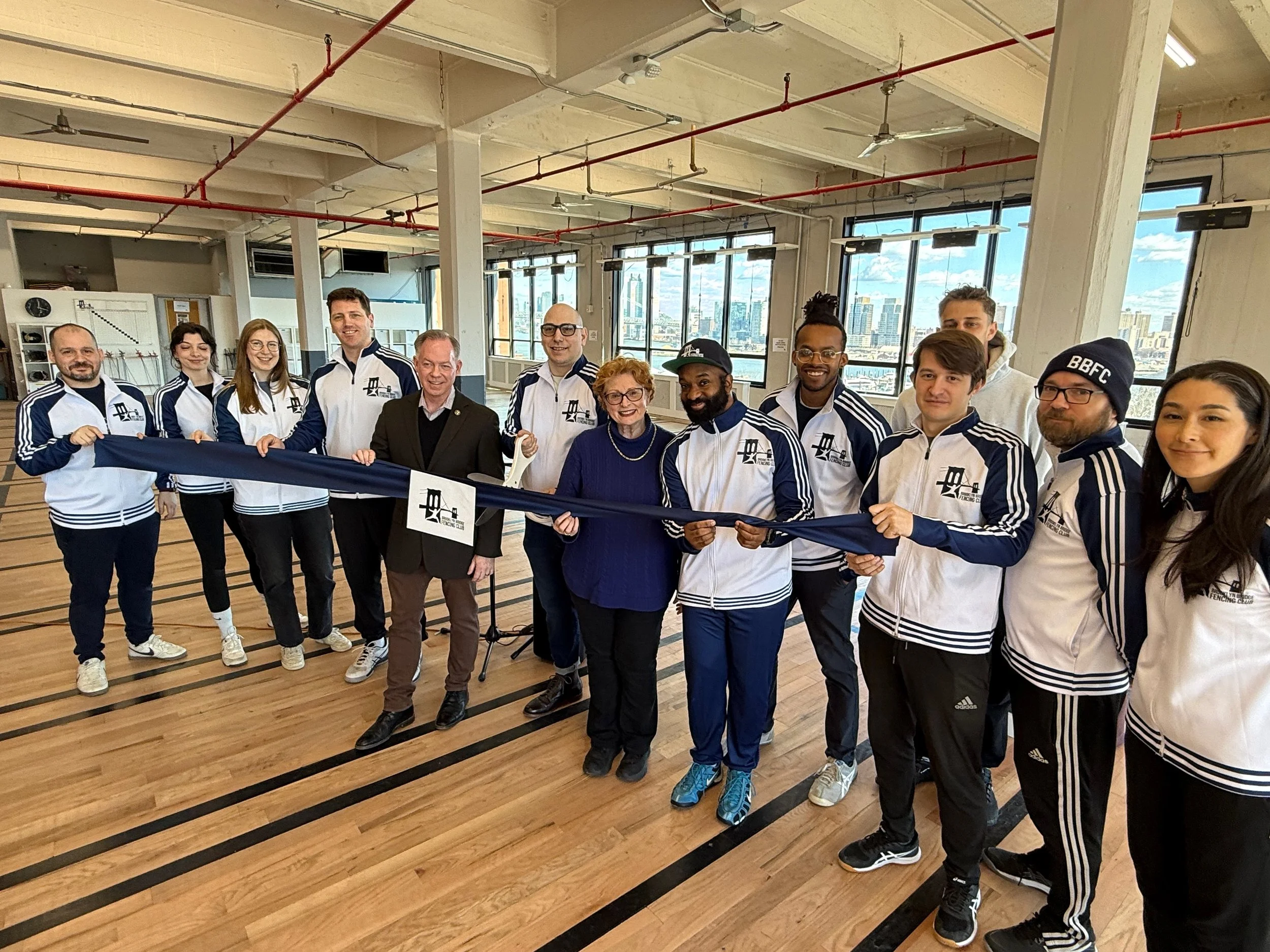
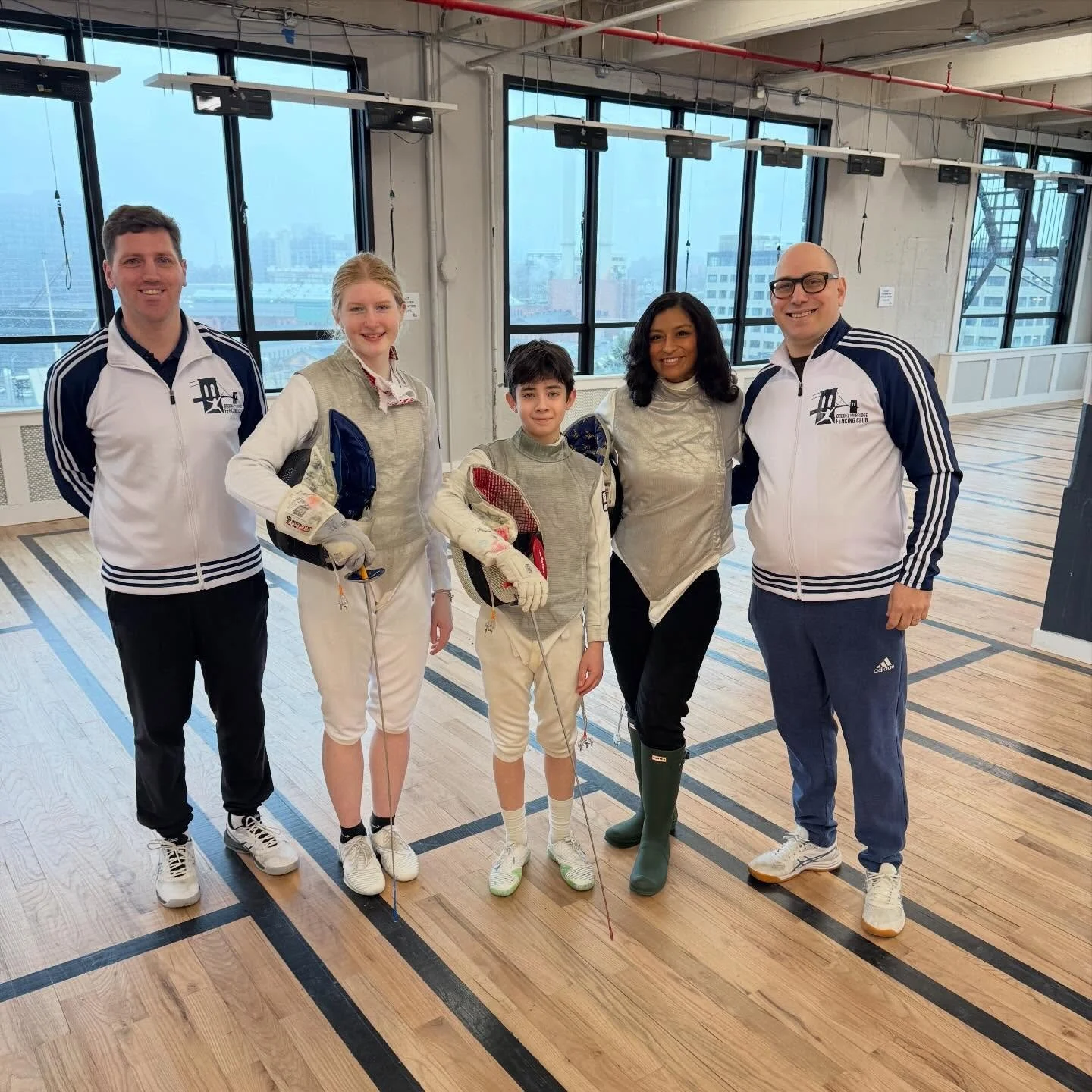
Off the strip, this past week marked a major milestone for the club. On March 14th, Brooklyn Bridge Fencing Club officially opened the doors to its new facility, celebrating with a ribbon-cutting ceremony attended by athletes, families, and community leaders, and featured on both Good Day New York and Brooklyn News 12, showcasing the energy of our community and the significance of this next chapter.
It’s been a week that captures what BBFC is all about: high-level performance, meaningful growth, and a shared passion for the sport. We’re excited to build on this momentum and continue creating opportunities for our fencers, both locally and on the international stage.